The Best Fluffy Pancakes recipe you will fall in love with. Full of tips and tricks to help you make the best pancakes.


A desktop humidor is a stationary storage box, usually lined with Spanish cedar, built to sit on a table or shelf and hold anywhere from about 15 to 300 cigars at a stable humidity. It’s the middle ground between a travel humidor, which is built for portability and holds far less, and a cabinet humidor, which is furniture-sized and starts around 250 cigars. Manufacturer capacity numbers are based on a slim Robusto (5 inches by a 50 ring gauge), so a mixed collection with thicker cigars or full boxes will realistically hold about 75% of the printed count.
This guide covers what actually matters when buying one: how to size it correctly, the four common construction types, what separates a good seal from a bad one, and the exact steps to season a new humidor before your first cigar goes in it. There’s a sizing calculator further down that does the capacity math for you.
Last updated: August 2026
What Is a Desktop Humidor, Exactly?
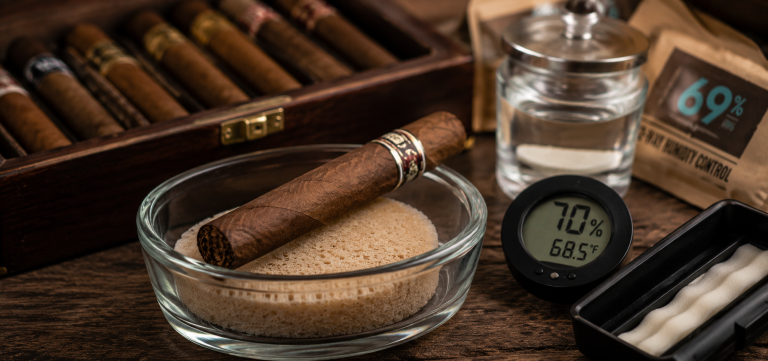
A desktop humidor is a passively humidified storage box. “Passive” means the humidity comes from a humidification device inside the box, gel, beads, or a foam-and-distilled-water setup, working together with the Spanish cedar lining to hold a stable environment, rather than from an active mechanical system. The cedar itself does real work here. It absorbs and releases moisture as conditions shift, which buffers small swings in humidity, and it naturally repels tobacco beetles.
The target environment inside is the same range that applies to any cigar storage: 65% to 72% relative humidity and 65°F to 70°F. Some manufacturers simplify this to “70/70” as a rule of thumb, but the wider range gives you more room to work with depending on your climate and how you like your cigars to smoke.
What Size Desktop Humidor Do You Actually Need?
Buy for your habits, not your current collection. Most people undersize their first humidor, fill it within a few months, and end up buying a second one they didn’t plan for.
Here’s the general breakdown by cigar count:
| Collection Size | Who It Fits | Nominal Capacity |
| Compact | Casual smokers, office desk | 15 – 25 cigars |
| Standard | Most beginners and regular smokers | 25 – 50 cigars |
| Medium | Active rotation, buys monthly | 50 – 100 cigars |
| Large | Serious enthusiasts, ages cigars | 100 – 150 cigars |
| Extra-Large | Collectors who buy by the box | 150 – 300 cigars |
| Cabinet territory | Buys in bulk, long-term aging | 250+ cigars |
Two things skew that printed number lower in real use. First, the rated capacity assumes slim Robustos. If you mostly smoke 56-plus ring gauge cigars or Churchill-length sticks, you’ll fit noticeably fewer. Second, cigar boxes themselves waste space compared to loose cigars, so if you like keeping full factory boxes intact, budget more room than a straight cigar count suggests.
A reasonable industry rule of thumb: take the printed capacity and multiply by 0.75 to estimate what you’ll actually fit with a mixed collection. Use the calculator below to reverse that math and find the nominal capacity you should be shopping for based on how many cigars you own now and how fast you’re buying.
Desktop Humidor Size Finder
Answer three quick questions to find the nominal capacity you should shop for.
Fill in the fields above and hit Find My Size.
Once you know your target size, our humidor capacity calculator can tell you how many cigars a specific box will actually hold based on its interior dimensions, useful once you’ve got a specific model in mind.
Desktop Humidor Types: Wood, Glass-Top, Acrylic, and Electronic
Traditional wood. A hardwood or veneer exterior with a full Spanish cedar interior. This is the standard format and the safest choice for a first humidor. Quality varies a lot by price point, so check seal and hinge quality before finish.
Glass-top. Same cedar-lined construction as a traditional wood humidor, but with a glass panel in the lid so you can see the cigars without opening it. Convenient for checking on your collection, though frequent lid-opening for any humidor, glass-top or not, causes small humidity dips that the cedar and humidification device have to recover from.
Acrylic or tempered glass. A newer category, often marketed as more airtight and easier to keep beetle-free since there’s less exposed bare wood on the exterior. Most are still cedar-lined on the inside, since cedar is what actually regulates the microclimate.
Electronic. Built-in active humidity control instead of a passive humidification device. These hold a more precise, consistent RH with less manual maintenance, which matters if you live somewhere with big seasonal humidity swings, but they cost more and need a power source.
For specific product recommendations across these types and price points, our complete guide to cigar boxes and humidors breaks down picks from budget desktop units to electric cabinet systems.
What to Look For When Buying One
Seal quality. This matters more than finish or brand name. Close the lid and check for light gaps at the hinge line. A humidor that doesn’t seal tightly will never hold a stable RH no matter how good the humidification system is.
Cedar quality and coverage. The interior should be fully lined, not just the tray. Thin, patchy, or unfinished-feeling cedar is a sign of a budget build that will struggle to buffer humidity swings.
Hygrometer. Nearly every humidor ships with one built in, but built-in hygrometers are frequently inaccurate out of the box. Plan to calibrate it (covered below) or replace it with a separate digital one.
Humidification system. Foam pillows are the entry-level standard. Gel and crystal beads last longer between refills. Two-way humidity packs, the kind that both add and pull moisture to hold a target RH, are the lowest-maintenance option and worth the upgrade cost for most buyers.
Dividers and trays. Useful if you like organizing by brand or strength, but they eat into usable capacity. Factor that into your sizing decision.
How to Season a New Desktop Humidor
Cedar ships from the factory dry. If you load cigars into an unseasoned humidor, the wood pulls moisture straight out of them instead of holding a stable environment. Seasoning solves this by pre-saturating the cedar before anything goes inside. Budget two to three days for the full process.
- Calibrate your hygrometer first. Fill a small bottle cap about three-quarters full with table salt and add a few drops of distilled water, just enough to make a damp, grainy paste, not a slurry. Seal the cap and the hygrometer together in an airtight bag or container for at least 8 hours. A saturated salt solution always produces exactly 75% relative humidity, so your hygrometer should read 75% when you check it. If it doesn’t, note the offset or adjust it if the model allows.
- Wipe down the interior with distilled water only. Never tap water. Tap water carries minerals and chlorine that can stain the cedar and encourage mold. Use a lint-free cloth or sponge, lightly dampened, just enough to darken the wood without leaving puddles or drips.
- Close the lid for 24 hours. Don’t open it during this window. This lets the cedar absorb the moisture you just applied.
- Charge your humidification device with distilled water (or a propylene glycol solution, if your device calls for it) and place it inside. Wipe off any excess liquid on the outside of the device first so it doesn’t drip onto the wood.
- Close the lid for another 24 to 48 hours. After that, check the hygrometer. You’re looking for a stable reading in the 65% to 70% range before you load any cigars.
- If it’s still reading high or uneven, give it another 24 hours. A humidor that won’t stabilize after five to seven days likely has a seal problem worth addressing before you trust it with cigars.
Once it’s holding steady, load your cigars and settle into a normal check-in routine, covered next.
Desktop Humidor vs. Travel Humidor vs. Cabinet Humidor
| Desktop | Travel | Cabinet | |
| Typical capacity | 15 – 300 cigars | 3 – 20 cigars | 250+ cigars |
| Humidification | Passive (cedar + device) | Passive, built for shock resistance | Often active/electronic |
| Built for | Stationary home or office storage | Transport, day trips, flights | Long-term collections, aging |
| Portability | Not designed to move often | Designed to move | Not portable |
If you’re deciding between a desktop humidor and something built specifically for transport, our guide to the best cigar travel cases covers that category in depth, including the difference between a same-day case and a true multi-day travel humidor.
Maintaining a Desktop Humidor Long-Term
Check the hygrometer weekly at first, then every couple of weeks once you know the humidor holds steady. Recharge or replace your humidification device before it fully dries out rather than after, since letting it run dry causes the RH to drop before you notice.
Rotate your cigars every month or two, moving ones from the edges toward the center and vice versa. Cigars near the walls of the box are more exposed to whatever small temperature and humidity shifts happen at the surface.
Keep the humidor out of direct sunlight and away from air vents or radiators. Temperature swings are often a bigger problem than humidity swings, since heat accelerates tobacco beetle eggs hatching and speeds up uneven aging.
If you ever see a white or gray dusting on a cigar’s wrapper, don’t assume the worst before checking. Our guide to telling cigar plume apart from mold walks through exactly how to tell the difference, since one is harmless and the other means the cigar needs to go.
Frequently Asked Questions
How many cigars does a desktop humidor hold?
Most desktop humidors are rated between 15 and 300 cigars, with 25 to 50 being the most common range for a first purchase. Real-world capacity runs about 75% of the printed number once you factor in thicker ring gauges or full box storage.
What humidity should a desktop humidor be set to?
The target range is 65% to 72% relative humidity at 65°F to 70°F. Many manufacturers simplify this to “70/70,” but the wider range still keeps cigars in good smoking condition.
Do I need to season a new humidor before using it?
Yes. New cedar is dry and will pull moisture out of your cigars instead of protecting them. Seasoning pre-saturates the wood first, and the full process takes about two to three days.
Can I use tap water in my humidor?
No. Tap water contains minerals and chlorine that can stain the cedar and promote mold growth. Use distilled water only, both for seasoning and for recharging your humidification device.
What’s the difference between a desktop and a cabinet humidor?
A desktop humidor is a stationary tabletop box holding roughly 15 to 300 cigars with passive humidification. A cabinet humidor is furniture-sized, starts around 250 cigars, and often uses active electronic humidity control for long-term aging.
Sources
Facts and figures in this guide were cross-checked against the following industry references:
- Cigars International, “How to Calibrate a Hygrometer”
- Northwoods Humidors, “What Size Of Humidor Is Right For You?”
- DutchCrafters, “How to Season a New Cigar Humidor”
FAQs
How many cigars does a desktop humidor hold?
Most desktop humidors are rated between 15 and 300 cigars, with 25 to 50 being the most common range for a first purchase. Real-world capacity runs about 75% of the printed number once you factor in thicker ring gauges or full box storage.
What humidity should a desktop humidor be set to?
The target range is 65% to 72% relative humidity at 65°F to 70°F. Many manufacturers simplify this to “70/70,” but the wider range still keeps cigars in good smoking condition.
Do I need to season a new humidor before using it?
Yes. New cedar is dry and will pull moisture out of your cigars instead of protecting them. Seasoning pre-saturates the wood first, and the full process takes about two to three days.
Can I use tap water in my humidor?
No. Tap water contains minerals and chlorine that can stain the cedar and promote mold growth. Use distilled water only, both for seasoning and for recharging your humidification device.
What’s the difference between a desktop and a cabinet humidor?
A desktop humidor is a stationary tabletop box holding roughly 15 to 300 cigars with passive humidification. A cabinet humidor is furniture-sized, starts around 250 cigars, and often uses active electronic humidity control for long-term aging.