The Best Fluffy Pancakes recipe you will fall in love with. Full of tips and tricks to help you make the best pancakes.

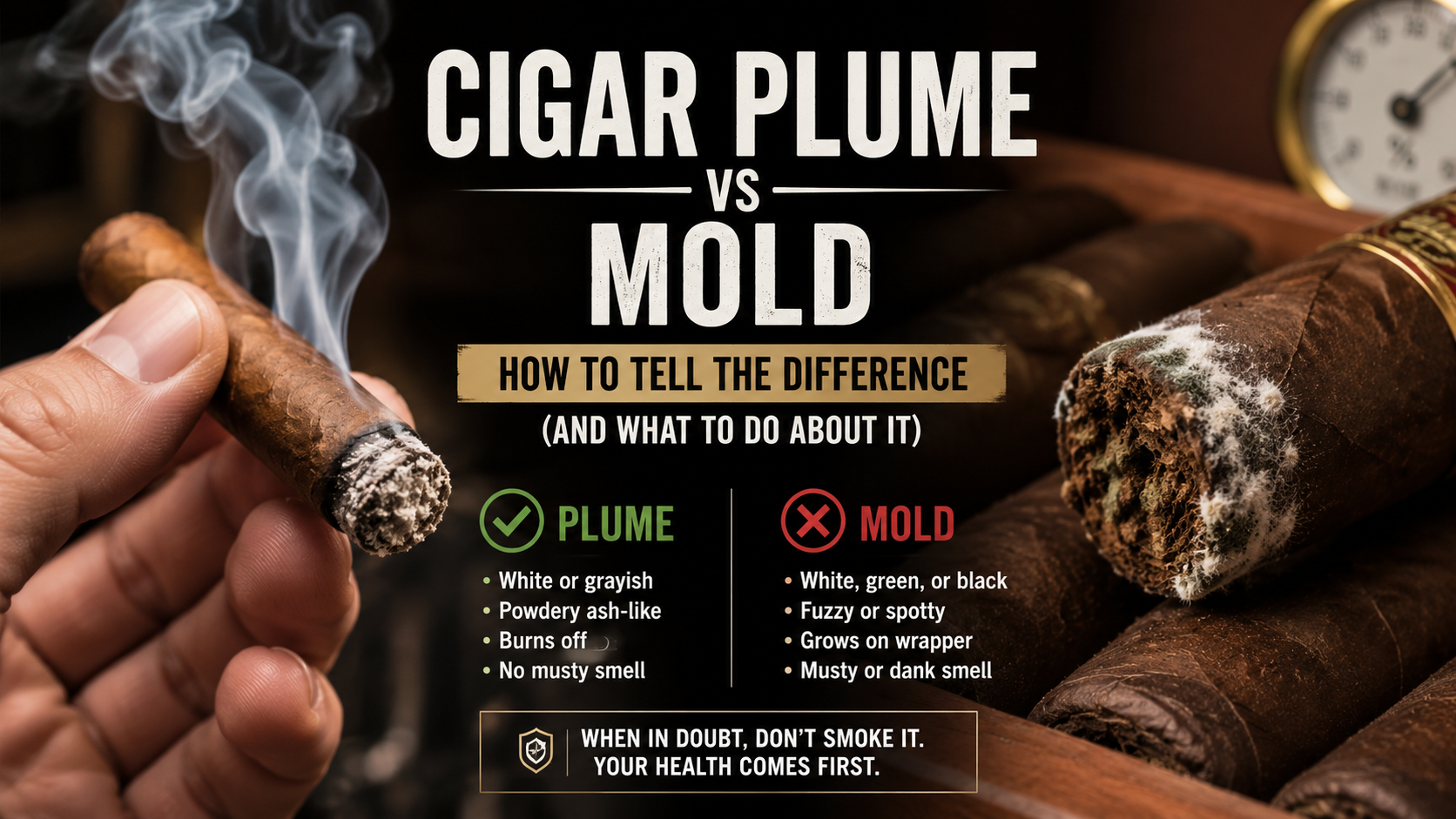
You open your humidor, pull out a cigar you’ve been aging for months, and see a fine white dusting across the wrapper. Before you panic and toss it – or worse, light it up without checking – here’s how to actually tell whether you’re looking at plume, a genuinely good sign, or mold, which means real trouble for your collection.
The Quick Answer
| Plume (Bloom) | Mold | |
| Color | White or grayish | Blue, green, gray, or fuzzy white |
| Texture | Dry, flat, crystalline, powdery | Fuzzy, fibrous, three-dimensional, web-like |
| Brush test | Wipes off completely with a finger or cloth | Doesn’t fully remove, often leaves a stain |
| Smell | Odorless | Musty |
| Location | Wrapper only, never the foot | Can appear on the wrapper and the foot |
| Cause | Natural oil and sugar crystallization during long aging | Excess humidity, poor air circulation, contaminated water |
| What to do | Brush off and smoke it | Discard it and inspect the rest of your humidor |
If that table answers your immediate question, great. Here’s the full breakdown of why each of those signs matters.
What Is Plume?
Plume, also called “bloom,” is a harmless white or grayish powdery substance that develops naturally on a cigar’s wrapper as it ages. It forms when the natural oils and sugars inside the tobacco slowly migrate to the surface over months or years and crystallize. That timeline is why you’ll rarely see plume on a new cigar – it takes real time in proper storage conditions to develop, and any early traces typically get wiped away just from normal handling before it has a chance to build up.
Cigars rolled with oilier tobaccos – Ashton VSG, San Cristóbal Ovation, or dark maduro wrappers like Connecticut Broadleaf or Mexican San Andrés, are more likely to develop noticeable plume, simply because there’s more oil available to migrate to the surface over time.
Here’s the part that matters most: plume doesn’t affect the flavor of the cigar. If anything, on darker maduro wrappers, some smokers report it tastes slightly sweeter. Finding plume on a cigar is generally read by experienced smokers as a sign the stick has been aging well in stable, well-maintained conditions – genuinely good news, not a defect.
What Is Mold?
Mold is a fungus, and it’s exactly what it sounds like – unwanted growth that develops on organic material when there’s excess moisture and humidity. Unlike plume, mold actively degrades the tobacco it grows on rather than sitting harmlessly on the surface.
Mold typically shows up as blue, green, or grayish growth with a fuzzy, fibrous, or web-like texture, distinct from plume’s flat, powdery crystalline structure. It’s most commonly caused by over-humidification – storing cigars above the ideal range, using tap water instead of distilled water in your humidification system, or poor air circulation inside the humidor. Our best cigar boxes guide covers the humidity fundamentals in more detail if you want the full picture on proper storage.
How to Tell Them Apart: Four Tests
- The brush test. Gently rub the white substance with your finger or a soft cloth. Plume wipes away cleanly and completely, leaving no mark behind. Mold resists removal, and even when you manage to scrape some off, it typically leaves a stain on the wrapper.
- The texture check. Plume is dry, flat, and powdery – almost ash-like. Mold is fuzzy, fibrous, or web-like, with a noticeably three-dimensional texture you can usually see even without touching it.
- The location check. Plume develops through the intact wrapper surface as oils migrate outward, which means it never appears on the foot of the cigar. Mold, by contrast, can show up on the foot as well as the wrapper. If you see white or colored growth specifically on the foot, treat it as mold until proven otherwise.
- The smell test. Plume is odorless. Mold typically carries a musty smell that’s noticeable even before you get close enough to examine the texture.
If you run through these checks and you’re still not confident, the safest move is asking your local tobacconist for a second opinion, or simply discarding the cigar. A single stick isn’t worth risking your health or the rest of your collection over.
What to Do If You Find Plume
Nothing to worry about. Gently brush the white dust off the wrapper with a soft cloth or your finger, then light up and enjoy – you’re smoking a cigar that’s been aging exactly the way it should.
What to Do If You Find Mold
Discard the affected cigar. Mold isn’t limited to what you can see on the surface – you can’t see what’s happening inside the filler and binder, and mold visible on the wrapper may have already penetrated deeper into the tobacco. Wiping the outside clean doesn’t tell you what’s going on underneath, and mold can produce compounds that taste bad and may be harmful if inhaled. No single cigar is worth that risk.
Beyond the affected stick, treat it as a humidor-wide problem:
- Inspect every other cigar in the humidor. Mold spreads through the air and can move to nearby cigars before you notice the first sign of it.
- Check your humidity levels. Standard guidance keeps cigars between 65% and 72% relative humidity. If you’ve been running consistently higher, that’s very likely your root cause.
- Switch to distilled water if you haven’t already – tap water introduces minerals and contaminants that make mold growth more likely.
- Clean the humidor thoroughly before reloading it with cigars, and consider relocating your remaining stock to a different, verified-clean storage space while you do.
- Improve air circulation if the humidor is packed tightly or positioned somewhere without steady airflow.
A Note on the Ongoing Debate
Worth knowing: not everyone in the cigar world agrees plume and mold are cleanly separate phenomena. A minority view argues there’s no rigorous scientific line between the two – that what smokers call “plume” may itself be a mild, non-harmful form of fungal growth rather than something categorically different from mold. That’s a genuine point of debate rather than settled science, but it hasn’t changed the practical consensus among most retailers, tobacconists, and experienced collectors: the identification tests above reliably separate harmless white bloom from the kind of growth that ruins a cigar, and that distinction is what actually matters for deciding whether to smoke or discard what you’re looking at.
Our Verdict
If what you’re looking at is dry, flat, white or grayish, brushes off completely without a stain, has no smell, and isn’t on the foot of the cigar, that’s plume – a genuinely good sign, and nothing to worry about. If it’s fuzzy, colored beyond white or gray, doesn’t fully brush off, smells musty, or shows up on the foot, treat it as mold: discard the cigar, inspect the rest of your collection, and take a hard look at your humidity setup before you restock.
Frequently Asked Questions
Is it safe to smoke a cigar with plume?
Yes. Plume is harmless and doesn’t affect the flavor of the cigar. Simply brush it off before lighting, or leave it – either way, it’s safe to smoke.
What causes cigar mold?
Mold is caused by excess moisture, typically from over-humidification, using tap water instead of distilled water in your humidification system, or poor air circulation inside a humidor.
Can plume appear on the foot of a cigar?
No. Plume forms as oils migrate outward through the intact wrapper surface, so it doesn’t appear on the foot. Growth on the foot of a cigar should be treated as mold.
How long does it take for plume to develop?
Plume typically takes months to years of proper aging to develop, which is why it’s rarely seen on new cigars. It’s most common on cigars made with oilier tobaccos, including many maduro wrappers.
What humidity level prevents mold on cigars?
Standard guidance keeps cigars between 65% and 72% relative humidity. Consistently exceeding that range significantly increases the risk of mold developing.
How do I know if it’s plume or mold without touching it?
Check the texture and color first – plume is flat, dry, and white or grayish, while mold is fuzzy, fibrous, and often blue, green, or gray. If you’re still unsure, gently test with a soft cloth: plume wipes away cleanly, while mold resists removal and can leave a stain.
Should I throw away my whole humidor if I find mold?
Not necessarily, but you should inspect every cigar inside it, clean the humidor thoroughly before reloading it, and review your humidity practices. If contamination is severe, replacing the humidor may be the safer option.