The Best Fluffy Pancakes recipe you will fall in love with. Full of tips and tricks to help you make the best pancakes.

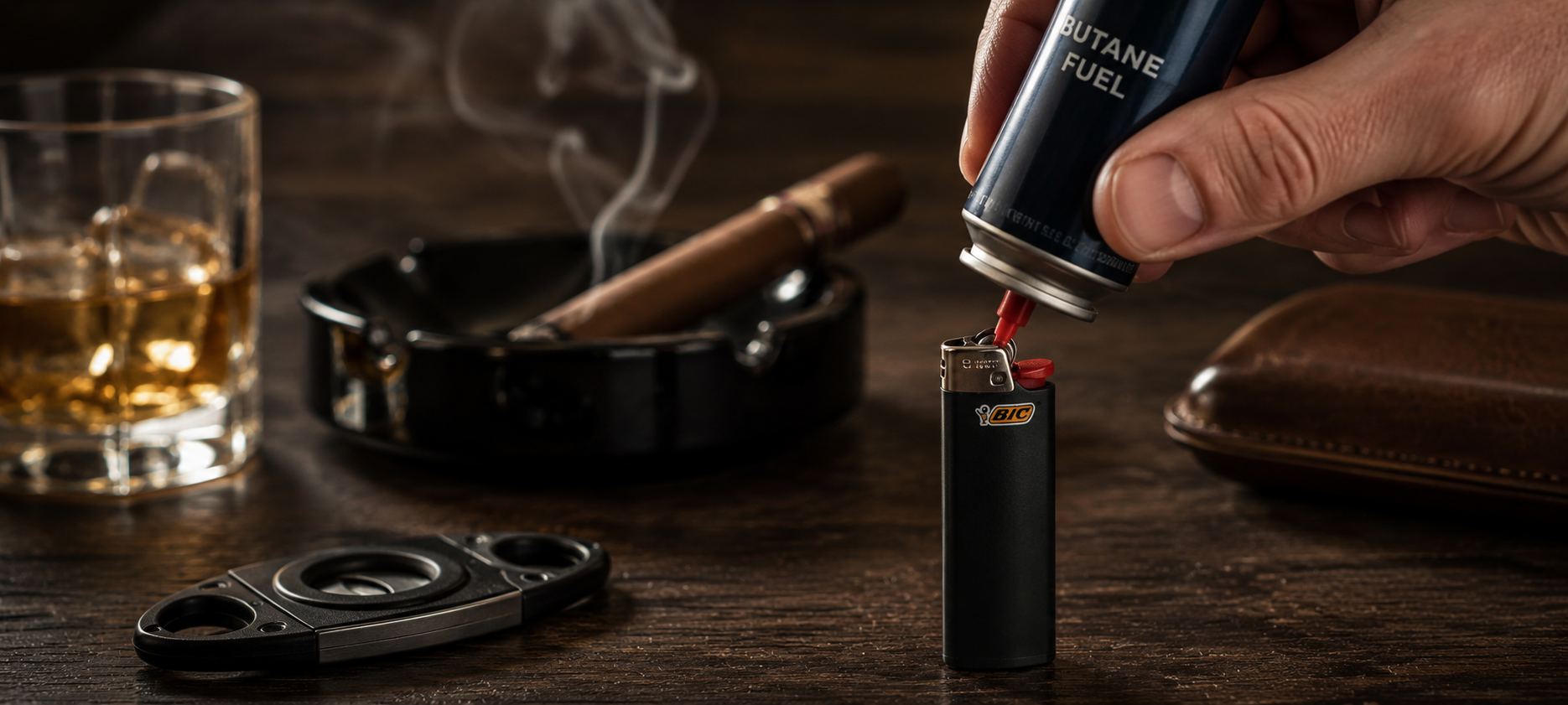
Yes. You can refill a Bic lighter. It takes a pushpin, a can of butane, and about five minutes. Videos showing exactly how to do it have been watched millions of times and the technique genuinely works.
Now for the part most of those videos skip: should you use a refilled Bic to light a premium cigar?
No. And the reasons go beyond just the safety concerns with the refill process itself.
This guide covers both questions honestly – how to refill a Bic if that’s what you need to do, and why cigar smokers specifically should treat a Bic lighter as a last resort rather than a go-to tool.
What Bic Actually Says About Refilling
Bic designs their lighters as single-use disposable products. The Bic website is explicit that their lighters are not meant to be refilled. This isn’t just legal boilerplate – it reflects a genuine engineering reality.
Bic lighters lack a pre-installed butane refill valve. Instead, they’re factory-filled through a hole in the bottom that is permanently sealed with a steel ball bearing. The entire lighter is built around the assumption that once the fuel runs out, you throw it away and buy a new one.
That design decision has practical consequences for anyone who tries to circumvent it.
How a Bic Lighter Works
Understanding the design helps explain why refilling is more complicated than it looks.
The butane fuel sits in a sealed reservoir at the bottom of the lighter. A small steel ball bearing seals the fill port. When you depress the valve stem, butane releases from the reservoir, passes through the burner, and the flint wheel ignites it.
The entire system is calibrated at the factory for a specific internal pressure – around 2 to 3 bar. That pressure is what produces a consistent, controlled flame. Once you open the sealed system and try to reseal it with improvised materials, maintaining that precise pressure becomes unreliable.
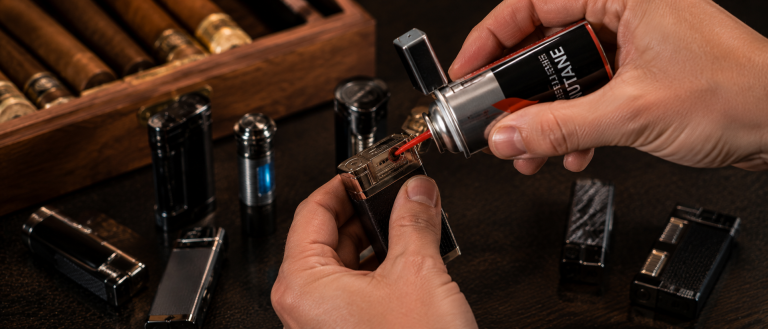
How to Refill a Bic Lighter – The Bottom Method
This is the most common method and the one that produces the most consistent results if you’re going to do it.
What You Need
- A pushpin, thumbtack, or thin screwdriver
- A can of butane fuel – high-purity 99 percent butane preferred
- Rubber grommets or a soft rubber pad for sealing
- Wire cutters or cuticle clippers plus a small file
- Disposable gloves
- Well-ventilated workspace away from any open flame
Step 1: Confirm the Lighter Is Empty
Make sure the lighter is completely empty before starting. Try to light it until it produces no flame and you hear no hiss from the valve. Attempting to open a pressurized lighter is dangerous.
Step 2: Locate the Fill Port
Turn the Bic upside down. Look at the bottom – you’ll see a small circular indentation or dimple in the center. That’s the sealed fill port where the steel ball bearing sits.
Step 3: Push Out the Ball Bearing
Using your pushpin or thin screwdriver, press firmly into the center of the fill port until the steel ball bearing pops into the reservoir. You’ll hear a faint hiss and see a small hole appear. This is your refill port. The ball bearing drops into the fuel tank – it stays there for all subsequent uses.
Step 4: Position the Lighter
Invert the Bic lighter so the flame end faces down and the newly opened port at the bottom points up. This orientation ensures liquid butane enters the reservoir rather than gas alone. Liquid butane fills the tank properly. Gas butane mostly escapes.
Step 5: Fill in Short Bursts
Place a rubber grommet over the butane canister nozzle if you have one – this helps form a tighter seal. Position the nozzle over the fill port and press down for 5 to 10 seconds. Remove and wait a moment. Repeat once or twice until the tank feels slightly heavier. Most users find this fills the chamber sufficiently without overpressurizing.
Step 6: Seal the Port
Once filled, you need to plug the hole. Options:
- Push a new pushpin into the hole – this is the quickest method but not a perfect seal
- Use wire cutters to clip the pushpin flush with the lighter bottom and file it smooth
- For a more permanent solution, install a small butane refill valve adapter designed for this purpose – these are available online and create a proper repeatable seal
Step 7: Wait Before Using
Let the lighter sit for at least two minutes before attempting to ignite it. The butane needs to stabilize and reach room temperature. Cold butane doesn’t ignite reliably.
The Risks of Refilling a Bic
Here’s the honest safety assessment that most how-to videos minimize.
Leaking is the Main Concern
Without a professionally engineered valve, the lighter often develops slow leaks around the improvised seal. A leaking lighter in your pocket is a genuine fire hazard – butane is heavier than air and pools rather than dispersing upward. You won’t necessarily smell the leak until it’s too late.
In a 2022 informal field study, lighters refilled using the pushpin method typically lasted 3 to 5 additional burn cycles before plastic fatigue or valve leakage became noticeable. The hole gets slightly larger with each refill, making the seal progressively less reliable.
Overpressurization Risk
Injecting too much butane or filling too quickly can overpressurize the reservoir. Bic’s plastic construction is not designed to handle pressure beyond its factory specification. The result in extreme cases can be a lighter that fails suddenly when ignited.
Petroleum Residue in Your Smoke
This matters specifically for cigar smokers. Standard Bic lighters use a naphtha-based flint wheel ignition system. When you use a Bic to light a cigar – whether the original fuel or refilled butane – the flint wheel can produce naphtha vapors that transfer to the tobacco. This is why serious cigar smokers avoid fluid lighters entirely for lighting tobacco.
Why Cigar Smokers Should Not Use a Bic Lighter Regardless
This is the bigger issue for anyone reading this in a cigar context. Whether you refill a Bic or use a fresh one, a Bic lighter is not the right tool for lighting premium cigars.
The Fluid and Flint Problem
A Bic lighter uses a flint wheel ignition system and the original fuel is naphtha – the same petroleum-based fluid used in Zippo lighters. Naphtha leaves a chemical taste on tobacco that’s detectable in the first third of any cigar you light with it.
Even after you refill a Bic with clean butane, the flint wheel mechanism remains. The wheel produces naphtha residue from the flint interaction that transfers to the flame and then to the tobacco. The first few puffs of a cigar lit with any fluid or flint-based lighter taste different – and not in a good way.
No Toasting Capability
Proper cigar lighting requires toasting the foot before applying a direct flame. A Bic lighter’s soft, flickering flame is difficult to control for the 20 to 30 second toasting process that gives you an even light. The flame moves with any air movement. It’s too close to the tobacco in normal use. The toast step – the most important part of lighting a cigar properly – is awkward with a Bic at best.
Wind Vulnerability
A Bic’s soft flame extinguishes in any meaningful wind. Golf courses, patios, outdoor events – anywhere you’re likely to want a cigar – are places where a Bic consistently fails at the crucial moment. Nothing ends a pre-game ritual faster than a lighter that won’t stay lit long enough to toast the foot.
The Butane Flavor Difference
Clean butane from a torch lighter burns at a higher temperature and produces no chemical residue on the tobacco. The difference in first-third flavor between a cigar lit with a butane torch and one lit with a Bic is not subtle. Most experienced smokers can identify it immediately.
What to Use Instead
A basic butane torch lighter solves every problem a Bic creates for cigar smokers.
Budget Option – Under $15
A single-jet butane torch lighter from any cigar retailer. No naphtha, no fluid residue, wind-resistant, and designed specifically for the toasting process that a Bic can’t deliver. This is the minimum equipment a cigar smoker should carry.
Mid-Range – $25-50
The Vertigo Cyclone triple-jet or similar options at this price point. Three jets handle any ring gauge from a corona to a 60-ring Gordo without requiring a clover punch technique for even lighting. Significantly more practical than a Bic for any cigar larger than a cigarillo.
Premium – $50-80
The Xikar HP3 triple-jet with the lifetime warranty that makes it genuinely the last lighter you’ll need to buy. At $60, it’s the investment that protects every cigar you light with it for years. A $10 Bic refilled three times costs $10. An HP3 costs $60 once and works better every single time.
For a complete breakdown of the best cigar lighters at every price point with specific recommendations, our best cigar lighter guide covers the top options in detail. And for the correct technique once you have the right lighter, our how to light a cigar guide covers toasting, lighting, and fixing uneven burns step by step.
When Refilling a Bic Actually Makes Sense
There are legitimate scenarios where knowing how to refill a Bic is genuinely useful.
Emergency preparedness – knowing how to extend the life of a lighter when you can’t buy a new one is a practical survival skill. The technique is used regularly in places where lighter replacement isn’t easily accessible.
Camping and field situations where you need any reliable fire source and have butane available but can’t get a new Bic. The refilled lighter is better than no lighter.
Non-cigar uses where the petroleum taste issue doesn’t matter – candles, camp stoves, paper. A refilled Bic works fine for all of these.
For cigars specifically, even in emergency situations, a butane torch lighter runs on the same fuel source a refilled Bic would use. If you have butane, you’re better off with a purpose-built torch.
The Environmental Angle
One honest argument for learning to refill a Bic is waste reduction. Millions of Bic lighters go into landfill every year. A refilled and reused Bic that lasts several additional burn cycles before being discarded is genuinely less wasteful than buying a replacement.
This argument holds for general Bic use. For cigar smokers specifically, the better environmental and economic case is buying one quality refillable butane torch lighter and maintaining it properly for years rather than cycling through Bics at all, refilled or not.
Our guide on how to refill a butane lighter covers the correct maintenance process for a proper butane torch lighter, including the purge step that most people skip and the butane quality choices that determine how long the lighter performs properly.
Our Verdict
You can refill a Bic lighter. The pushpin bottom method works, produces a functional lighter for several additional burn cycles, and is a genuinely useful skill in emergency or resource-limited situations.
You should not use a Bic lighter – refilled or original – to light premium cigars. The fluid residue, the flint wheel petroleum transfer, the wind vulnerability, and the inability to properly toast a cigar foot all make a Bic the wrong tool for the job regardless of what fuel is in the tank.
A basic butane torch lighter costs under $15 and fixes every problem a Bic creates in a cigar context. Buy one. Fill it with quality butane. Use the Bic for candles and camping stoves where none of these issues matter.
If you find yourself in a situation where a Bic is the only option and a cigar needs lighting, the refilled version is marginally better than using original naphtha fuel. But the right answer to that situation is having the right lighter in the first place.
Frequently Asked Questions
Can you refill a Bic lighter?
Yes. Despite being marketed as disposable, Bic lighters can be refilled by accessing the steel ball bearing seal at the bottom of the lighter with a pushpin, then injecting butane from a standard canister while the lighter is inverted. The process works but requires care – Bic lighters are not designed for refilling and improvised seals can develop leaks over time.
Is it safe to refill a Bic lighter?
It carries risks that don’t exist with purpose-built refillable lighters. The main concerns are slow leaks from improvised seals that create fire hazards in your pocket, overpressurization from filling too quickly, and the general fact that Bic’s plastic construction isn’t designed for the repeated pressure changes that refilling creates. It’s safer than most people assume when done correctly – outdoors, with an empty lighter, using quality butane – but it’s not as safe as using a designed-for-refilling torch lighter.
Why shouldn’t cigar smokers use a Bic lighter?
Three reasons specific to cigars. First, the flint wheel produces naphtha residue that transfers to the tobacco and affects the first-third flavor. Second, the soft flame can’t hold steady for the 20 to 30 second toasting process that produces an even light. Third, the flame extinguishes in any wind, making it unreliable outdoors where most cigar smoking happens.
What is the best way to refill a Bic lighter?
The bottom method using a pushpin to displace the steel ball bearing, followed by injecting butane from an inverted canister, then sealing with a flush-cut pushpin or a dedicated refill valve adapter. The valve adapter method is more reliable for multiple refills as it creates a proper seal rather than relying on a pushpin plug that can leak as the hole widens with repeated use.
How many times can you refill a Bic lighter?
Approximately 3 to 5 times using the pushpin method before the hole becomes too large for a reliable seal and leakage becomes a concern. The valve adapter method allows more refills because it creates a proper repeatable seal rather than relying on a pin plug. At that point, replacing the Bic or switching to a proper refillable lighter is the practical solution.
What butane should I use to refill a Bic lighter?
High-purity butane at 99 percent or above. Lower-grade butane contains impurities that can clog the small internal components of the lighter over time and affect performance. The same quality butane recommended for premium cigar torch lighters – Lotus, Xikar, or Vector – works perfectly for refilling a Bic if you need to.
Does refilling a Bic lighter save money?
Marginally. A standard Bic costs around $1.50 to $2.00. A can of quality butane runs $5 to $8 and refills multiple lighters. Cost savings per refill are real but small. The environmental benefit of keeping plastic out of landfill is a more compelling argument than the cost savings alone.
What is better than a Bic for lighting cigars?
Any butane torch lighter. At the budget end, single-jet butane torches under $15 from cigar retailers outperform a Bic in every relevant way – no petroleum residue, wind-resistant, controllable for toasting. At the mid-range, triple-jet torches like the Vertigo Cyclone handle any ring gauge. At the premium end, Xikar’s lifetime warranty makes their HP3 the last cigar lighter most smokers ever need to buy.
Already have a butane torch lighter and want to get the most from it? Our how to refill a butane lighter guide covers the purge step most people skip, the butane brands worth using, and the common mistakes that shorten a quality lighter’s life.