The Best Fluffy Pancakes recipe you will fall in love with. Full of tips and tricks to help you make the best pancakes.

E cigarettes have been around long enough that most people have seen one, used one, or know someone who has. They haven’t been around long enough for most people to understand them clearly.
The category covers everything from a $10 convenience store disposable to a $200 regulated box mod with a refillable tank. The nicotine delivery, vapor production, flavor options, cost per day, and health risk profile differ significantly across those options. Treating them as one product leads to bad purchasing decisions and a lot of confusion about what e cigarettes actually are and what they do.
This is CigarBoxPro’s complete guide to e cigarettes in 2026. How they work. Every device type explained honestly. Nicotine strength guidance. The FDA regulatory picture. Safety considerations without the propaganda in either direction. And the best options at every price point and use case.
What Is an E Cigarette?
E cigarettes, also known as electronic cigarettes or electronic nicotine delivery systems (ENDS), work by heating a nicotine-containing liquid, producing emissions usually described as vapor. They consist of a battery, a cartridge – disposable, replaceable, or refillable – with liquids called e-liquids, and a heating mechanism. This heats the cartridge ingredients to create a vapor that is inhaled by the consumer. They do not contain tobacco and there is no combustion or smoke.
Unlike traditional cigarettes that burn tobacco to produce smoke, e-cigarettes heat a liquid solution called e-liquid or vape juice to create an inhalable vapor. Vaping works by heating the e-liquid to produce vapor, without combustion.
The absence of combustion is the most important technical distinction between e cigarettes and traditional cigarettes. Burning tobacco produces thousands of chemical compounds, many of them toxic. Heating e-liquid to vapor produces a significantly smaller and different set of compounds. This is the basis for the harm reduction argument for e cigarettes – not that they’re safe, but that they’re less harmful than combustion tobacco for existing smokers.
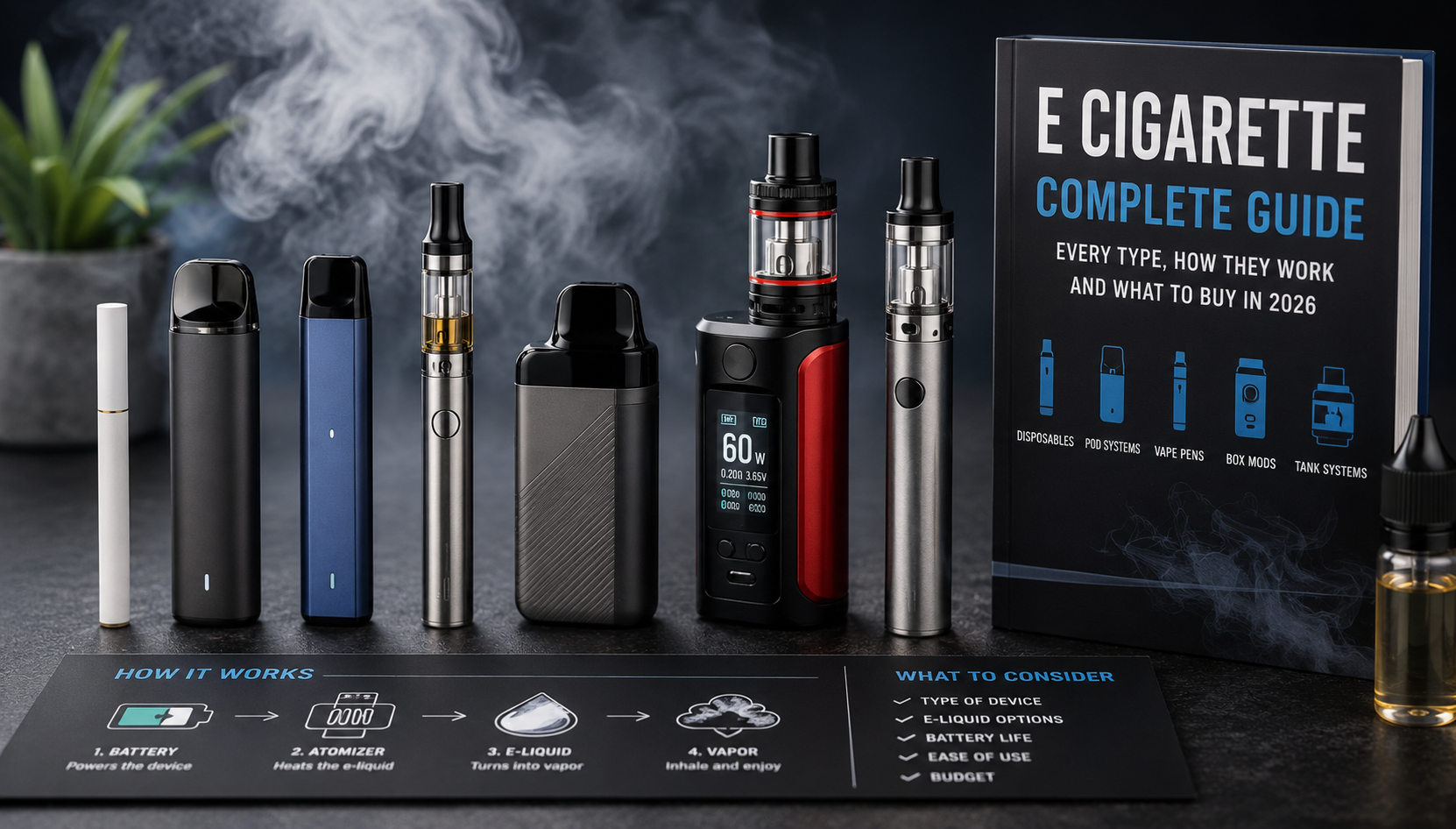
Every e cigarette has three main components: the battery, the atomizer, and the e-liquid. The battery powers the internal atomizer. The atomizer then heats the e-liquid. This creates the vapor you inhale. Most modern beginner devices are draw-activated.
How E Cigarettes Work: Step by Step
Understanding the mechanism helps you understand why different devices perform differently and what to look for when buying.
Step 1 – The draw or button press activates the battery. Draw-activated devices fire automatically when you inhale. Button-activated devices require pressing a button while inhaling. Most beginner and disposable devices are draw-activated for simplicity.
Step 2 – The battery sends power to the heating element. The coil heats up when the battery fires, turning e-liquid into vapor. In 2026, most premium brands use mesh coil technology – a flat, grid-like coil with more surface area – which produces richer flavor and more consistent vapor than older wire coils.
Step 3 – The heated coil vaporizes the e-liquid. The e-liquid saturating the wicking material around the coil vaporizes on contact with the heated surface. The ratio of propylene glycol to vegetable glycerin in the e-liquid determines vapor density and flavor intensity.
Step 4 – Vapor is inhaled through the mouthpiece. The mouthpiece is designed for a mouth-to-lung draw – the same inhalation style as a cigarette. You draw vapor into your mouth first, then inhale it into your lungs.
Step 5 – The LED indicator monitors status. Found on most devices, it blinks when the battery is low or the e-liquid is depleted. Smart disposables often feature a full LCD screen instead.
Types of E Cigarettes: Every Device Category Explained
There are six main types of vape on the market in 2026. Understanding each one determines which device is right for your use case.
1. Disposable E Cigarettes
The most purchased e cigarette category in 2026. A sealed, pre-filled device that requires no setup, no refilling, and no maintenance. Use it until the e-liquid runs out or the battery dies, then discard.
In 2026, most premium disposable brands use mesh coil technology for richer flavor and more consistent vapor. Airflow sensors detect when you’re drawing from the mouthpiece and trigger the battery to fire the coil – making disposables truly buttonless.
Puff counts range from 600 for compact travel options to 50,000 for premium rechargeable-battery disposables. Most daily vapers use devices in the 5,000 to 15,000 puff range. Nicotine strengths typically run 50mg nicotine salt.
Pros: Zero setup. Wide flavor variety. Consistent experience from first to last puff. No maintenance.
Cons: Higher cost per puff than refillable systems. Environmental waste concern. Fixed flavor – can’t change mid-device.
Best for: Beginners, smokers transitioning from cigarettes, travel use, social vapers who want convenience over cost optimization.
Our RAZ vape flavors guide covers one of the most popular disposable brands in detail – 100-plus flavors across every device in the lineup.
2. Cigalikes
Cigalikes look and feel like tobacco cigarettes. They are inhale-activated, come with a rechargeable battery, and use disposable cartridges.
The earliest category of e cigarette and now the smallest segment of the market. The cigarette-format design was the original appeal – familiar size, familiar draw, familiar visual. The performance limitations compared to modern pod systems and disposables have made them less relevant in 2026.
Nicotine delivery is lower than modern nicotine salt devices because cigalikes typically use freebase nicotine at lower concentrations. For smokers who need higher nicotine to satisfy cravings, cigalikes are often less effective than disposables using nicotine salt.
Pros: Familiar format for cigarette smokers. Simple operation.
Cons: Lower nicotine delivery than modern alternatives. Limited flavor options. Cartridge availability can be restricted.
Best for: Smokers who specifically want a device that feels like a cigarette. A diminishing use case as better alternatives have become widely available.
3. Pod Systems
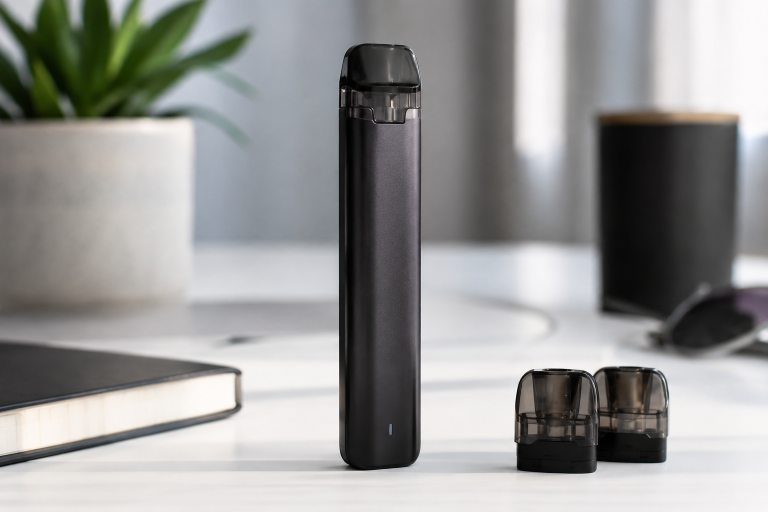
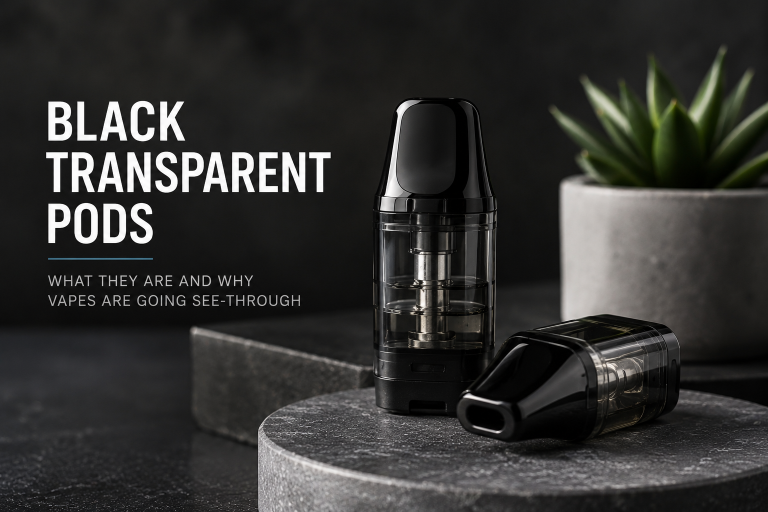
Pod vape kits come in two parts: a pod that contains the coil and vape juice, and a device that contains the battery. The pod usually clips into the battery section. Pod devices range from simple, buttonless systems with fixed coils to more powerful devices with multiple modes capable of producing larger clouds of vapor.
Pod systems are the most popular category among former smokers who have moved past the disposable stage. The reusable battery with replaceable or refillable pods reduces cost per puff significantly while maintaining the simplicity that makes disposables appealing.
Closed pod systems – Closed systems come with a fixed-coil, non-refillable pod. When the coil burns out or the vape juice runs out, you replace the whole pod. Similar experience to a disposable but with a reusable battery. The JUUL Alto is the most recognized closed pod system in the US market.
Open pod systems – Open systems come with refillable pods – meaning you can choose your own vape juice. Maximum flavor flexibility, lowest cost per ml of e-liquid, most control over nicotine strength. Requires slightly more maintenance – filling pods, replacing coils – but the cost reduction is significant for daily vapers.
Pros: Reusable battery reduces waste and cost. Wide device and pod selection. Open systems allow full flavor customization.
Cons: Requires more knowledge than disposables. Coil replacement adds maintenance. Initial device cost higher than disposables.
Best for: Daily vapers who’ve established their preferences and want to reduce per-puff costs. Smokers who’ve successfully transitioned and want a sustainable long-term setup.
4. Vape Pens
Tube-format devices with a built-in battery and a refillable tank. Longer than pod systems, more vapor production, and designed for use with standard freebase nicotine e-liquids rather than the nicotine salts that dominate the pod and disposable market.
Tube Pen Starter Kits offer a classic, ergonomic format that is easy to grip.
Vape pens occupy the middle ground between beginner pod systems and advanced box mods. More power than a pod, more vapor production, but simpler than a full box mod setup. The format suits vapers who’ve moved past nicotine salt devices and want more vapor without the complexity of adjustable wattage systems.
Pros: More vapor than pod systems. Simple operation. Good battery life. Works with the widest range of e-liquid types.
Cons: Larger than pod systems. Less discreet. Requires more e-liquid knowledge for optimal performance.
Best for: Experienced vapers stepping up from pod systems, cloud chasers who want more vapor production without box mod complexity.
5. Box Mods
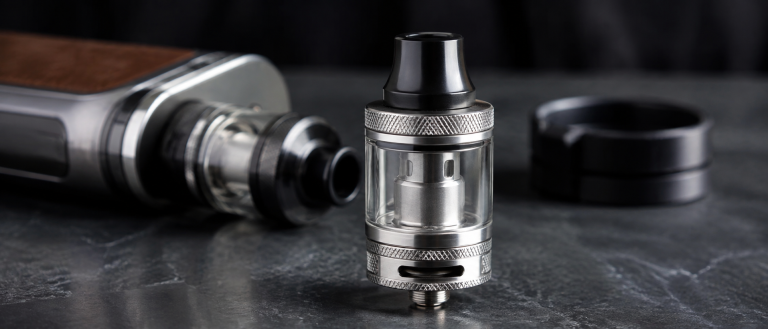
Box mods are powerful devices with long battery life and numerous adjustment options for demanding vapers.
The advanced category. Box mods allow precise control over wattage, temperature, and coil resistance. Paired with a sub-ohm tank – a tank designed for low-resistance coils that produce maximum vapor – a box mod produces significantly more vapor than any other device type.
Box mods paired with a high-wattage sub-ohm tank produce the most vapor of all different vape types – typically three to four times more than a vape pen. For most vapers this level isn’t necessary – it requires very low nicotine strengths and a direct-to-lung technique.
The direct-to-lung technique used with high-power box mods is fundamentally different from the mouth-to-lung technique of cigarettes and most beginner devices. This makes box mods the wrong starting point for cigarette smokers transitioning to vaping.
Pros: Maximum vapor production. Complete control over performance parameters. Most cost-effective long-term option per puff.
Cons: Steep learning curve. Larger form factor. Requires understanding of coil resistance and wattage relationships. Wrong technique for cigarette-to-vape transition.
Best for: Experienced vapers who prioritize vapor production and customization. Not for beginners.
E Cigarette E-Liquid: What’s Inside
VG (Vegetable Glycerin) produces thick vapor clouds. PG (Propylene Glycol) carries the flavor and provides the throat hit.
Every e-liquid is a blend of these two base ingredients with flavoring and optional nicotine. Understanding the ratio explains performance differences between devices and e-liquids.
High PG (60% PG and above) – Thinner liquid, stronger throat hit, more intense flavor, less vapor. Works best in pod systems and cigalikes.
High VG (70% VG and above) – Thicker liquid, smoother throat hit, more vapor production, slightly less flavor intensity. Works best in sub-ohm tanks and box mods.
50/50 blends – The middle ground that works across the widest range of device types.
Nicotine in E-Liquid: Two Types
Freebase nicotine – The standard nicotine form used in traditional e-liquids. Available in 0mg, 3mg, 6mg, 12mg, and 18mg concentrations. Delivers a throat hit that becomes harsh at higher concentrations. Used primarily in vape pens and box mods.
Nicotine salts – A modified form of nicotine that delivers satisfaction at higher concentrations without harsh throat hit. Typically 25mg to 50mg. Used in most modern disposables and closed pod systems. More closely mimics the nicotine delivery profile of cigarettes, making it more effective for smokers transitioning to vaping.
Nicotine Strength Guide: What to Choose
Choosing the wrong nicotine strength is one of the most common reasons people fail to switch from cigarettes to e cigarettes successfully. Too low and the device doesn’t satisfy cravings. Too high and the experience is unpleasant.
| Smoker Type | Recommended Nicotine Strength |
|---|---|
| Heavy smoker (20-plus per day) | 50mg nicotine salt |
| Moderate smoker (10-20 per day) | 25-35mg nicotine salt |
| Light smoker (fewer than 10 per day) | 10-20mg nicotine salt or 6-12mg freebase |
| Social smoker | 3-6mg freebase |
| Non-smoker | 0mg |
Starting too low is the most common mistake for smokers making the transition. Unsatisfied nicotine cravings are why people return to cigarettes after trying e cigarettes. Match your nicotine level to your smoking habit before stepping down.
Are E Cigarettes Safe? The Honest Assessment
This is the question that produces the most misleading answers from both directions – pro-vaping advocates who overstate the safety case and anti-vaping campaigns that overstate the danger.
The honest position is more nuanced than either extreme.
Vaping remains significantly less harmful than smoking, making it one of the most effective harm-reduction tools for adult smokers looking to quit in 2026.
The key phrase is “for adult smokers.” E cigarettes as a harm reduction tool for people who already smoke is a meaningfully different proposition than e cigarettes as a new product for non-smokers.
The FDA position is that no tobacco or nicotine product is approved as safe. E cigarettes have received marketing authorization as modified risk tobacco products in specific cases – meaning evidence supports they’re less harmful than cigarettes, not that they’re without risk.
What the evidence shows in 2026:
E cigarettes contain significantly fewer toxic compounds than combustion cigarettes. The absence of combustion eliminates the majority of harmful compounds in cigarette smoke. Long-term inhalation effects of specific e-liquid compounds including some flavorings are not fully established. Nicotine itself carries cardiovascular risks and is addictive regardless of delivery method. Youth use remains a significant public health concern and the reason for ongoing regulatory action.
The latest Cochrane Review finds high-certainty evidence that nicotine e-cigarettes are more effective than traditional nicotine-replacement therapy in helping people quit smoking.
For smokers who want to quit combustion tobacco, e cigarettes are the most effective harm reduction tool currently available. That’s a meaningful public health fact. It is not permission to start vaping as a new habit if you don’t currently smoke.
E Cigarettes and FDA Regulation in 2026
The regulatory landscape around e cigarettes in the US is the most complicated it’s been since the category emerged.
The FDA requires all e cigarette products to submit a Premarket Tobacco Application (PMTA) for marketing authorization. Products without authorization are technically illegal to sell. Enforcement has been selective and inconsistent, which is why thousands of unauthorized products remain on shelves.
Products with explicit FDA marketing authorization are the safest regulatory bet for buyers who want assurance of ongoing availability. For the complete list of every FDA-authorized vape product and what the authorization actually means for buyers, our FDA approved vapes 2026 guide covers every authorized product currently on the US market.
State regulations add additional complexity. Flavor bans, age verification requirements, online sales restrictions, and taxation all vary significantly by state. Our vape regulations by state guide covers what’s legal where you live with state-by-state detail.
Best E Cigarettes in 2026: CigarBoxPro Picks by Category
Best Disposable E Cigarette: RAZ TN9000
Puffs: 9,000 | Nicotine: 50mg | Price: $15-20
The widest flavor selection in the disposable category with consistent mesh coil performance. The built-in screen showing battery and puff count is unusual at this price. Zero-nicotine version available. For the complete RAZ flavor guide, our RAZ vape flavors guide covers all 100-plus options.
Best Closed Pod System: JUUL Alto
Nicotine: 50mg | Price: $9.99-14.99
FDA marketing authorized for tobacco and menthol variants – the most important regulatory credential in the current market. Widely available including at gas stations and pharmacies, though pricing swings a lot by retailer type – our Alto vape price guide breaks down what you’ll actually pay. The most recognized pod system in the US market with consistent nicotine delivery.
Best Open Pod System: Vaporesso XROS 4
Nicotine: Adjustable (use any e-liquid) | Price: $25-35
The Vaporesso Xros series is an open system with refillable pods – meaning you can choose your own vape juice. Adjustable airflow, USB-C charging, wide coil compatibility. The best transition device for vapers ready to move from disposables to a refillable system with lower long-term costs.
Best for Beginners Overall: Disposable in 9,000-15,000 puff range
For smokers making the transition from cigarettes, a disposable in the 9,000 to 15,000 puff range at 50mg nicotine salt is the lowest-friction starting point. No setup, no learning curve, consistent performance, and the widest flavor selection available in any device category. Our beginner vape guide covers the complete transition from cigarettes to vaping with specific device and nicotine strength recommendations.
Best Zero-Nicotine Option: Elf Bar BC5000 Zero
Puffs: 5,000 | Nicotine: 0mg | Price: $12-18
The most widely available and consistently reviewed zero-nicotine disposable. For vapers who have eliminated nicotine and want to maintain the vaping ritual without chemical dependency. Our no nicotine vape guide covers this category in full detail.
E Cigarette Cost: What You’ll Actually Spend
One of the most practical considerations that most e cigarette guides don’t address honestly.
| Option | Daily Cost | Monthly Cost | Annual Cost |
|---|---|---|---|
| Pack-a-day cigarettes (US avg) | $8-12 | $240-360 | $2,880-4,320 |
| Disposable vapes (daily use) | $2-4 | $60-120 | $720-1,440 |
| Closed pod system | $1.50-3 | $45-90 | $540-1,080 |
| Open pod system | $0.75-1.50 | $22-45 | $270-540 |
| Box mod with sub-ohm tank | $0.50-1 | $15-30 | $180-360 |
The cost reduction from cigarettes to any e cigarette format is significant. The cost reduction from disposables to refillable systems is equally significant over a full year. Most daily vapers who switch from disposables to an open pod system save $400 to $900 annually.
How to Use an E Cigarette: Beginner’s Quick Start
For first-time users, the technique matters more than most people expect.
Mouth-to-lung technique – The correct method for most e cigarettes, especially disposables and pod systems. Draw vapor into your mouth first, hold briefly, then inhale into your lungs. This is the same technique as cigarette smoking and produces the most satisfying nicotine delivery for smokers transitioning to vaping.
Direct-to-lung technique – Used with high-power box mods. Inhale directly into the lungs without holding in the mouth. Requires low-nicotine e-liquid. Not appropriate for cigarette smokers transitioning to vaping.
Puffing frequency – E cigarettes deliver nicotine faster than cigarettes in some cases. Take a few puffs and wait a few minutes before continuing. Vaping continuously without pausing is a common beginner mistake that leads to nicotine overconsumption.
Priming a new coil – For refillable devices, fill the pod or tank and wait 5 to 10 minutes before using to allow e-liquid to saturate the wicking material. Firing a dry coil burns the wicking material and ruins the coil immediately.
E Cigarette Maintenance: Keeping Your Device Working
For disposables – no maintenance required. Use until empty and discard.
For pod systems and refillable devices:
Clean the pod or tank when changing flavors to prevent flavor mixing. Replace coils when you notice a burnt taste – typically every one to two weeks for daily vapers. Keep contacts clean with a dry cloth. Charge before the battery fully depletes to extend battery lifespan. Store upright to prevent e-liquid from pooling around the coil.
Our Verdict
E cigarettes are the most effective harm reduction tool available for adult smokers who want to quit combustion tobacco. The latest Cochrane Review finds high-certainty evidence that nicotine e-cigarettes are more effective than traditional nicotine-replacement therapy in helping people quit smoking. That’s a meaningful public health fact worth stating clearly.
For smokers making the transition, start with a 50mg nicotine salt disposable in the 9,000 to 15,000 puff range. Match the nicotine strength to your smoking habit before stepping down. Choose flavors that make vaping genuinely preferable to cigarettes rather than forcing yourself through tobacco flavors out of principle.
For existing vapers optimizing their setup, move from disposables to an open pod system when you’ve established your flavor preferences. The cost reduction is significant and the experience is comparable or better.
For non-smokers – e cigarettes are not a wellness product. The harm reduction argument applies specifically to existing smokers. Starting a nicotine habit via e cigarette as a new activity is not a decision the evidence supports.
Frequently Asked Questions
What is an e cigarette?
An e cigarette is a battery-powered device designed to deliver nicotine and flavoring through vaporized liquid rather than tobacco combustion. Unlike traditional cigarettes that burn tobacco to produce smoke, e-cigarettes heat a liquid solution called e-liquid to create an inhalable vapor. They consist of a battery, heating element, and e-liquid cartridge or tank. They do not contain tobacco and produce no combustion or smoke.
How does an e cigarette work?
Every e cigarette has three main components: the battery, the atomizer, and the e-liquid. The battery powers the internal atomizer. The atomizer heats the e-liquid. This creates the vapor you inhale. Draw-activated devices fire automatically when you inhale. The vapor is inhaled mouth-to-lung for most devices, the same technique as cigarette smoking.
Are e cigarettes safer than regular cigarettes?
Vaping remains significantly less harmful than smoking, making it one of the most effective harm-reduction tools for adult smokers looking to quit in 2026. The absence of combustion eliminates the majority of toxic compounds in cigarette smoke. However, no e cigarette is approved as safe by the FDA. Inhaling aerosolized e-liquid compounds carries risks that are less severe than combustion tobacco but not zero. For existing smokers, e cigarettes are a meaningful harm reduction option. For non-smokers, they represent a new nicotine exposure risk.
What nicotine strength should I use in an e cigarette?
Heavy smokers (20-plus cigarettes per day) should start at 50mg nicotine salt. Moderate smokers (10-20 per day) should start at 25-35mg. Light smokers (fewer than 10 per day) should try 10-20mg. Starting too low is the most common reason people return to cigarettes after trying e cigarettes – unsatisfied cravings pull people back to combustion tobacco.
What types of e cigarettes are available?
The main categories in 2026 are disposables, cigalikes, closed pod systems, open pod systems, vape pens, and box mods. Disposables are the most purchased and lowest setup. Box mods are the most advanced and highest performing. Most beginners and cigarette-to-vape transitioners should start with a disposable or closed pod system.
Are e cigarettes FDA approved?
Some e cigarettes have received FDA marketing authorization through the PMTA process – the JUUL Alto tobacco and menthol variants being among the most notable US examples. Most flavored disposables and the majority of the market do not have marketing authorization. No e cigarette is approved as safe or as a smoking cessation device. For the complete list of FDA-authorized products, our FDA approved vapes guide covers every authorized product currently on the market.
How much does an e cigarette cost?
Disposable e cigarettes cost $10 to $35 depending on puff count. Closed pod systems cost $10-15 for the device plus $13-18 per pod pack. Open pod systems cost $25-40 for the device plus $15-25 for a 30ml bottle of e-liquid. Box mods cost $50-150 for the device plus $15-30 per month in e-liquid and coils. All formats cost significantly less than daily cigarette smoking.
Can e cigarettes help you quit smoking?
The latest Cochrane Review finds high-certainty evidence that nicotine e-cigarettes are more effective than traditional nicotine-replacement therapy in helping people quit smoking. E cigarettes address both the nicotine dependency and the behavioral habit of smoking simultaneously – which is why they outperform patches and gum in quit-rate studies. Consult your doctor about incorporating e cigarettes into a structured quitting plan.
What flavors are available in e cigarettes?
The flavor range available across e cigarettes in 2026 is extremely wide – fruit, menthol, dessert, tobacco, candy, beverage, and more. Flavor availability varies by state due to regulatory restrictions. Several states including Massachusetts and California have banned flavored vape products. Our vape regulations by state guide covers flavor availability rules state by state.
New to vaping and deciding where to start? Our beginner vape guide covers everything from choosing your first device to setting your nicotine strength – the complete roadmap for making a successful switch from cigarettes.