The Best Fluffy Pancakes recipe you will fall in love with. Full of tips and tricks to help you make the best pancakes.

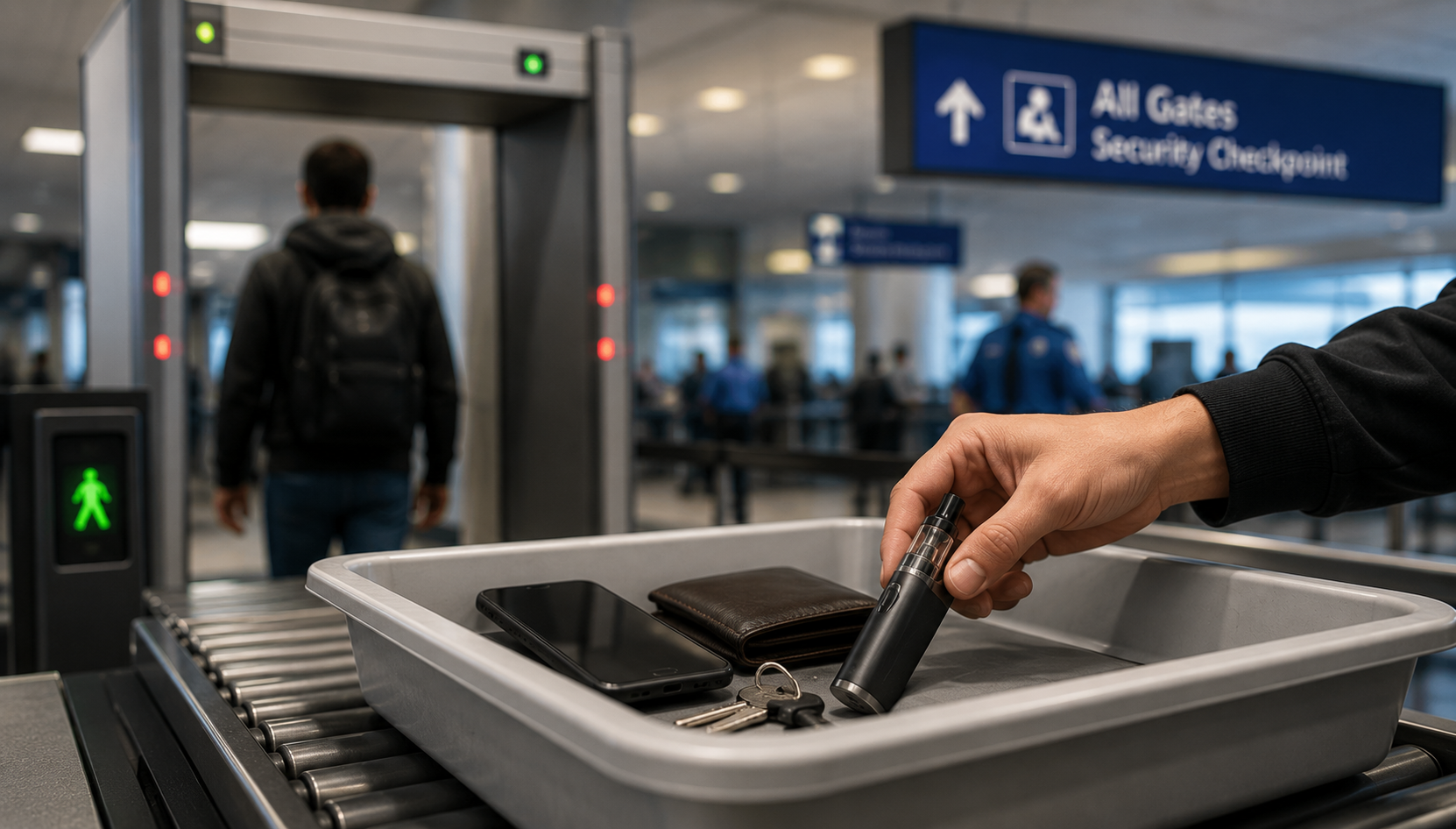
You’re standing in the security line, patting your pockets, and it hits you. Your vape is still in there. Is that thing about to set off the detector and hold up a line of forty people while a guard pulls a peach ice disposable out of your jacket like it’s evidence?
Short answer: probably, yeah. Most vapes will go off in a metal detector, because most vapes are basically built out of the exact stuff metal detectors are designed to catch.
Here’s what’s actually happening inside your device, why it matters more at some checkpoints than others, and what really happens if the alarm goes off.
So, Will Your Vape Go Off in a Metal Detector?
In most cases, yes. A vape doesn’t need to look metal to act like metal. Even a slim, plastic-wrapped disposable is hiding a coil, a battery, and a handful of tiny connector parts underneath that shell, and that’s exactly what a metal detector is built to notice.
Whether it actually trips the alarm comes down to three things: how much metal is packed into your specific device, how sensitive the detector is set to, and a bit of luck.
Why Vapes Set Off Metal Detectors in the First Place
Metal detectors, whether it’s a walk-through unit or a handheld wand, all work the same basic way. They create an electromagnetic field, and when a metal object passes through it, the field gets disturbed. The machine picks up on that disturbance and beeps. It’s not “looking” for vapes specifically, it’s just reacting to metal, and it turns out vapes are full of it.
Break a vape down and here’s what you’re actually carrying:
- The coil (atomizer) – a small wound wire, usually kanthal, nichrome, or stainless steel, that heats up to vaporize the e-liquid. This part is almost pure metal.
- The battery – a lithium-ion cell with a metal casing and metal internals. Every vape has one, disposable or not.
- The housing and connectors – stainless steel, aluminum, or zinc alloy bodies, plus threading and contact plates that keep the electrical circuit closed.
Stack all of that together and you’ve basically built a small metal object that also happens to vaporize flavored liquid. A plastic disposable carries less metal than a stainless steel box mod, sure, but less isn’t none.
Does the Type of Vape Change the Odds?
Yes, and the scale is pretty simple: the bigger and heavier the device, the more metal it’s carrying, and the more likely it is to trip a sensitive detector.
| Device Type | Metal Content | Likely to Trigger a Detector? |
|---|---|---|
| Slim disposable, like a RAZ vape flavors device or a Bugatti vape | Low – small coil, small battery | Sometimes, especially on high-sensitivity units |
| Closed pod system, like the JUUL Alto | Moderate – bigger battery, metal pod housing | Usually |
| Vape pen | Moderate to high – full metal tube body | Usually |
| Box mod | High – dual batteries, steel or aluminum chassis, tank | Almost always |
Even a zero-nicotine disposable is built the exact same way under the hood as a nicotine one – same coil, same battery, same metal shell, just different juice inside. If you want the full rundown on how those compare, our no nicotine vape guide covers it. Point is, “it’s just a flavor pod” doesn’t buy you a pass with the detector.
What About Airport Security Specifically?
This is where people usually get confused. Most major US airports haven’t relied on old-school walk-through metal detectors as the main line of defense in years. TSA’s primary screening tool at most checkpoints is millimeter wave Advanced Imaging Technology (AIT), which is the body scanner you stand in with your arms raised. It checks for both metallic and non-metallic items using low-power radio waves, not a magnetic field. Walk-through metal detectors (WTMDs) are still in use too, especially in TSA PreCheck lanes, and they work exactly the way we described above.
Either way, your vape isn’t sneaking past unnoticed. AIT flags it as an anomaly on your body, a WTMD beeps if there’s enough metal in it, and if somehow neither catches it, the X-ray scanning your bag absolutely will. Airport screening equipment is about as sensitive as it gets, so if you’re hoping your vape can just slip through undetected, plan for the opposite.
The Rule That Actually Matters: Carry-On, Not Checked
Whether the alarm goes off is honestly the smaller issue here. The rule you actually need to follow is this: electronic cigarettes and vaping devices are allowed only in carry-on baggage, never in checked luggage. TSA and the FAA are firm on this because of the lithium-ion battery sitting inside. If that battery shorts out and overheats in the cargo hold, there’s nobody there to catch it before it turns into a fire. In the cabin, at least a flight attendant can respond in time.
What to actually do at the checkpoint:
- Keep the vape in your carry-on or personal item, never in a checked bag.
- Pull it out and place it in a bin with your laptop and liquids instead of leaving it buried in a backpack pocket.
- Use a case or cap that prevents it from firing accidentally while it’s bouncing around your bag.
- If you’re carrying bottled e-liquid separately, it still falls under the standard 3.4 oz liquids rule.
- Never use or charge it inside the airport or on the plane. That one’s non-negotiable.
What Happens If the Alarm Actually Goes Off?
Nothing dramatic. This isn’t a movie. If a walk-through detector beeps because of your vape, you’ll usually get pulled aside for a quick pat-down or a wand pass while the officer figures out what triggered it. Once they spot the vape, that’s typically the end of it.
The bigger the device, the more likely they’ll want a closer look, mostly because a dual-battery box mod reads very differently than a set of keys. Keep it visible, keep it out of your pockets during screening, and you’ll be through in under a minute.
Other Places With Metal Detectors: Concerts, Stadiums, Schools
Airports aren’t the only spot this comes up. Stadiums, concert venues, courthouses, and some schools run walk-through detectors or handheld wands too, and the sensitivity varies a lot more than it does at an airport. A venue trying to move twenty thousand people through the gate in an hour is often tuned down to ignore belt buckles and phones, so a small disposable might slide through without a beep. A courthouse detector, on the other hand, tends to be turned all the way up.
The safer move at any checkpoint that isn’t an airport is to check the venue’s posted bag and device policy before you go. A lot of stadiums and concert venues simply don’t allow vapes inside at all, metal detector or not, and that’s a separate problem from whether the machine beeps. If you’re the kind of traveler who packs cigars along with your vape, our cigar travel case guide covers how to pack those so they don’t raise questions in the X-ray either.
Quick Tips Before You Walk Through
- Take it out of your pocket before you approach the detector. Don’t count on the machine missing it.
- Bigger devices, like box mods and vape pens, should go through the X-ray with your bag, not stay in your pocket.
- Small disposables are less likely to trigger a low-sensitivity detector, but “less likely” still means it happens plenty.
- If you’re flying, keep it in your carry-on. Full stop.
- If security asks to look at it, just hand it over. It’s a legal item in nearly every context, so there’s nothing to be nervous about.
Our Verdict
Yes, your vape will probably go off in a metal detector, and no, that’s not a big deal. Every vape, from a $10 disposable to a $150 box mod, has enough metal in the coil, battery, and housing to register on a sensitive machine. Airports catch it one way or another regardless, through the body scanner if not the metal detector, so don’t waste energy trying to hide it. Keep it in your carry-on, keep it out of your pocket during screening, and you’ll be through security faster than you’d wait for a coffee afterward.
Frequently Asked Questions
Do vapes go off in metal detectors?
Yes, in most cases. Vapes contain a metal coil, a lithium-ion battery, and often a metal or metal-threaded housing, all of which a functional metal detector is built to pick up.
Do disposable vapes set off metal detectors less than mods?
Usually, yes. Disposables carry less metal than a box mod or vape pen, so they’re more likely to slip past a low-sensitivity detector. High-sensitivity units, like the ones at most airports, will typically still catch them.
Can I bring a vape through airport security?
Yes. Vapes are allowed through TSA screening but must be carried in your carry-on bag, never in checked luggage, because of the fire risk posed by the lithium-ion battery inside.
Do airports even use metal detectors anymore?
Most major checkpoints now rely on millimeter wave body scanners as the primary screening tool, but walk-through metal detectors are still used too, especially in TSA PreCheck lanes. Either system will pick up a vape.
What happens if my vape sets off a metal detector?
You’ll likely get a quick pat-down or wand check while security confirms what triggered the alarm. Once they see it’s a vape, you’re free to go.
Will a vape set off a metal detector at a concert or stadium?
It can, but venue detectors are often tuned to ignore small metal items to keep lines moving. Check the venue’s bag and device policy separately, since many ban vapes regardless of whether they’d set off the alarm.
Sources: TSA – Electronic Cigarettes and Vaping Devices, TSA – Screening Technology Fact Sheet, FAA – Vapes on a Plane, EPA – Radiation and Airport Security Scanning