The Best Fluffy Pancakes recipe you will fall in love with. Full of tips and tricks to help you make the best pancakes.

Most people who wear a cigar band ring have never smoked a cigar in their life. And most casual cigar smokers have slid a band off a stick without thinking twice about the story behind it.
Both groups are missing something worth knowing.
The cigar band ring connects two worlds – tobacco culture and fine jewelry – in a way that didn’t happen by accident. It happened because of branding, history, and one very clever Dutch businessman in 19th-century Cuba.
What Is a Cigar Band Ring?
There are two things the term refers to, and it’s worth separating them clearly.
The first is the actual paper or foil band wrapped around a cigar. Cigar bands are decorative paper or foil bands wrapped around cigars, primarily to identify the brand or variety. Most feature the brand’s logo, name, or other intricate designs. Every premium cigar you’ve picked up has one. It’s the label, the identity, the first thing you see before you even smell the tobacco.
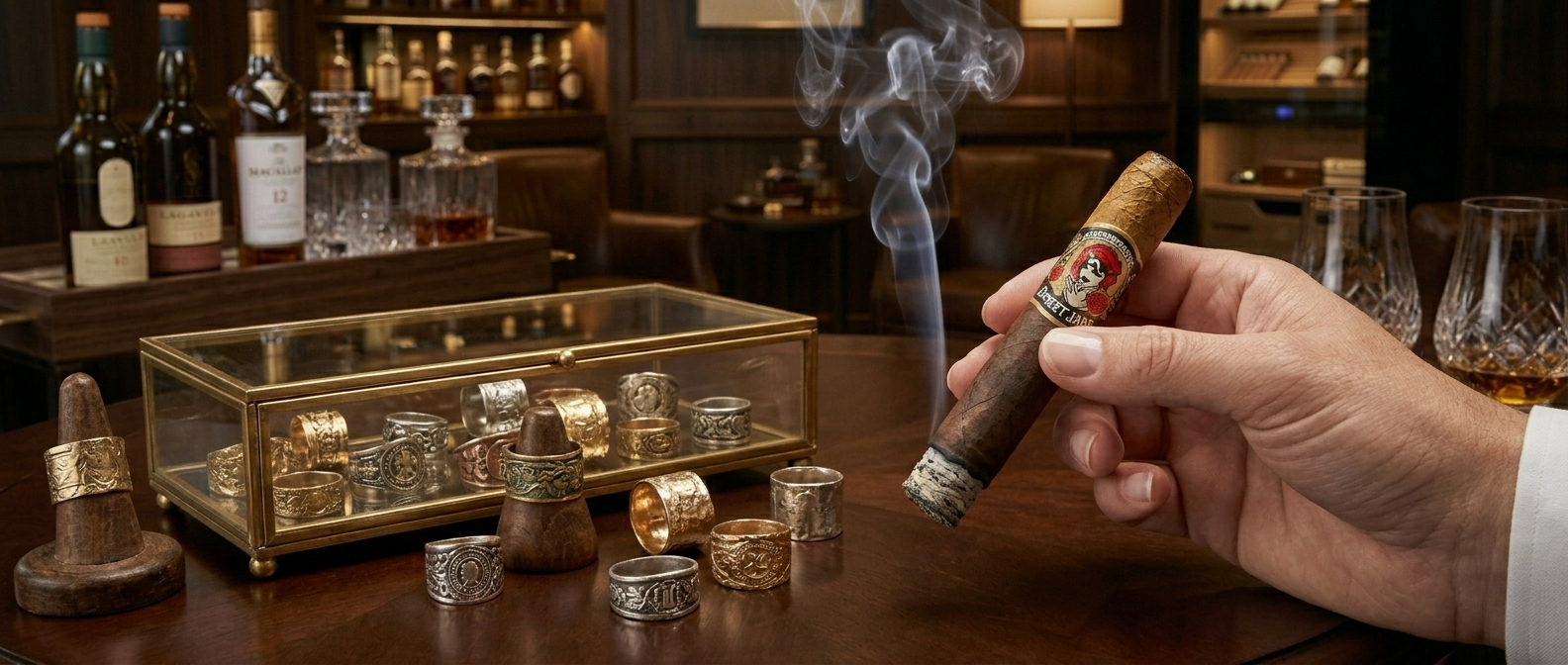
The second – and increasingly popular – meaning is a style of jewelry ring. In jewelry terms, a cigar band ring features a wide, flat, or gently curved profile, typically measuring 6 to 12 millimeters or more in width. It wraps around the finger much like a cigar band wraps around a cigar. Think bold, flat, substantial – the opposite of a thin delicate band.
Both meanings share the same origin story.
Where Did the Cigar Band Come From?
The story of cigar rings begins in 1830, when Gustave Bock, a Dutch businessman and cigar manufacturer, introduced the concept. At the time, cigars were a luxury enjoyed by aristocrats and the elite. The problem was that cigars often left stains on the fingers of smokers. Bock designed decorative paper rings that not only prevented staining but also became an effective branding tool.
His strategy worked. Within two decades, nearly every major Cuban export brand carried a cigar band, and what began as a branding solution quickly became a symbol of refinement and status.
The majority of the early bands were made around 1880 in Germany, a country noted for the art of lithography. German lithographers were known for their use of brilliant colors, especially bright red, green, gold and silver. The bands became miniature works of art – brand crests, portraits, intricate borders. Collectors started saving them. Kids slid them onto their fingers. Jewelers took notice.
How the Band Became a Ring
The jump from tobacco paper to precious metal didn’t take long once people realized how good a wide band looked on a finger.
Gone are the days when little girls slipped colorful cigar bands over their ring fingers, pretending to be engaged to the boy they had a crush on. That tradition – more widespread than most people realize – planted the visual association between cigar bands and rings firmly in popular culture.
The credit for designing the first cigar band ring as a piece of jewelry goes to Louis Comfort Tiffany, a renowned American artist and jeweler. In the late 1800s, Tiffany took inspiration from the cigar bands he encountered and created a unique style of ring that captured the essence of these intricate bands.
From there, the style spread. High-end jewelry brands, including Cartier, embraced this trend, crafting exquisite cigar band engagement rings and luxury fashion accessories. By the mid-20th century, the cigar band ring had become one of the most recognized silhouettes in jewelry design.
The Cultural Moment – 1960s and 1970s
The cigar band ring hit its cultural peak in the post-war decades. Wide cigar bands became major trends during the 1960s and 1970s. These bold, chunky rings were frequently worn by Elizabeth Taylor, Sophia Loren, and other major stars of the era.
This is the same period when cigar culture itself was at its most visible – boardrooms, golf courses, boxing rings, Hollywood. The band on the finger and the band on the cigar were both signaling the same thing: taste, confidence, a certain kind of authority.
What a Cigar Band Ring Looks Like Today
The style never really went away. It just cycles in and out of fashion while the cigar version stays constant on every premium stick.
While cigar bands have traditionally been associated with men’s jewelry, they’ve gained popularity among women looking for a more substantial, unisex ring or gender-neutral wedding jewelry. The cigar band is often seen as a symbol of strength and sophistication. A wide band can look spectacular nestled against a diamond engagement ring.
Modern versions range from plain polished gold to diamond-set pavé to textured and engraved surfaces. Today, wide gold bands now hold heirloom diamonds, scatter-set gemstones, bold single-stone designs, and architectural modern engagement rings. This added width offers more surface, more intention, and more opportunity for meaning.
The practical case for the style is straightforward – unlike large cocktail rings or high-set engagement styles, cigar band rings sit close to the finger, making them ideal for everyday wear. They don’t catch on things. They don’t look out of place at a poker table or a formal dinner.
What the Band on a Cigar Actually Tells You
Back to the tobacco side for a second – because if you smoke cigars, the band isn’t just decoration.
The band on a premium cigar carries real information. Country of origin, brand family, blend line, and size designation are all usually present. Cuban cigars carry a Habanos S.A. hologram. Some bands indicate limited editions or specific vintage releases. Learning to read a band is part of understanding what you’re smoking.
Traditionally, bands were put on by hand, secured with a dab of plant-based glue. Bands must be put at the same height on each cigar and the glue must not ooze out, causing the band to attach itself to the cigar and risking damage to the wrapper when removed. That detail matters – if the band is stuck, don’t force it off before you smoke. Let the heat from the first few puffs loosen it first. Tearing the wrapper trying to remove a stuck band is one of the more avoidable rookie mistakes in cigar smoking.
Should You Remove the Band Before Smoking?
We get asked this more than you’d think. There’s no hard rule, but our position is practical: leave it on until the heat from smoking loosens the glue, then slide it off cleanly. Removing it before lighting risks wrapper damage. Leaving it on the whole time is fine too – it won’t affect the smoke.
Some smokers collect their bands. Some toss them. If you’re smoking something memorable – a birthday cigar, a post-event smoke, a limited release – keeping the band as a reference is worth the extra two seconds. It’s a small log of what you’ve smoked and when.
For more on how to handle a cigar properly from cut to final third, check our how to smoke a cigar guide. And if you’re still figuring out which cigars to reach for, our best cigars for beginners list covers everything worth starting with.
Our Take
The cigar band ring is one of those details that connects smoking culture to something bigger – design, history, status, craftsmanship. Whether it’s the foil band on your Padrón or the wide gold ring on someone’s finger at the next table, both carry the same lineage.
That lineage started on a Cuban tobacco floor in the 1830s. It ran through Tiffany’s workshop, Elizabeth Taylor’s hand, and every humidor in every serious cigar lounge since. Not bad for something that started as a way to keep tobacco stains off a gentleman’s gloves.
Explore more on cigars and the culture around them in our lifestyle section and our sports section – where we cover everything from post-game victory smokes to golf course picks.
Frequently Asked Questions About Cigar Band Rings
What is a cigar band ring?
It refers to two things. First, the decorative paper or foil band wrapped around a cigar to identify the brand. Second, a style of jewelry ring featuring a wide, flat profile that resembles that same band. Both meanings trace back to the same 19th-century origin in Cuban tobacco culture.
Where did cigar bands originate?
Gustave Bock was a European immigrant who moved to Cuba and worked there as a factory owner. He decreed that all shipments of cigars would henceforth bear his name upon a band as a mark of pedigree – initially to prevent tobacco stains on fingers, and quickly as a branding tool. Most early bands were produced by German lithographers known for their vivid, detailed print work.
What does a cigar band ring look like in jewelry?
A wide, flat or slightly curved band – typically 6 to 12 millimeters or wider – worn on the finger. It can be plain polished gold, diamond-set, engraved, or textured. The key characteristic is the substantial width, which is what gives it the cigar band silhouette. It sits low on the finger and is built for daily wear.
Should you remove the cigar band before smoking?
Not necessarily before. The safest approach is to wait until the first few puffs of heat loosen the glue, then slide the band off cleanly. Forcing it off cold risks tearing the wrapper, which affects the burn and the overall smoke.
Are cigar band rings only for men?
Not anymore – and historically they weren’t exclusively men’s jewelry either. Today the style is widely worn by both men and women as wedding bands, fashion rings, and statement pieces. The bold, wide profile works across genders and pairs well with both minimalist and layered jewelry setups.
Do cigar bands have collector value?
Some do. Vintage Cuban cigar bands – particularly those from the late 1800s to mid-1900s – carry real collector interest. The art of lithography used on early bands was sophisticated, and well-preserved examples from historic brands can be genuinely valuable. Even modern limited edition bands from premium houses are worth holding onto.
What information does a cigar band contain?
Brand name, logo, country of origin, and often the blend line or series name. Cuban cigars include a Habanos S.A. hologram. Limited releases sometimes carry edition-specific markings. Reading the band gives you a quick reference for what you’re smoking and where it came from.
How did cigar bands inspire jewelry?
The visual appeal of the wide, ornate bands on cigars caught the attention of jewelry designers in the late 1800s. Louis Comfort Tiffany is credited with creating the first cigar band-style ring as a piece of fine jewelry. The style was later picked up by major houses including Cartier and became one of the defining ring silhouettes of the 20th century. For a deeper look at the history of cigar bands in jewelry, the Natural Diamond Council covers it well.
Where can I learn more about cigar culture and lifestyle?
Start with our lifestyle section for pairings, lounge culture, and the finer details around the smoking experience. Our sports section covers the intersection of cigars and athletics – from golf course picks to post-game victory smokes like the Joe Burrow cigar story.