The Best Fluffy Pancakes recipe you will fall in love with. Full of tips and tricks to help you make the best pancakes.

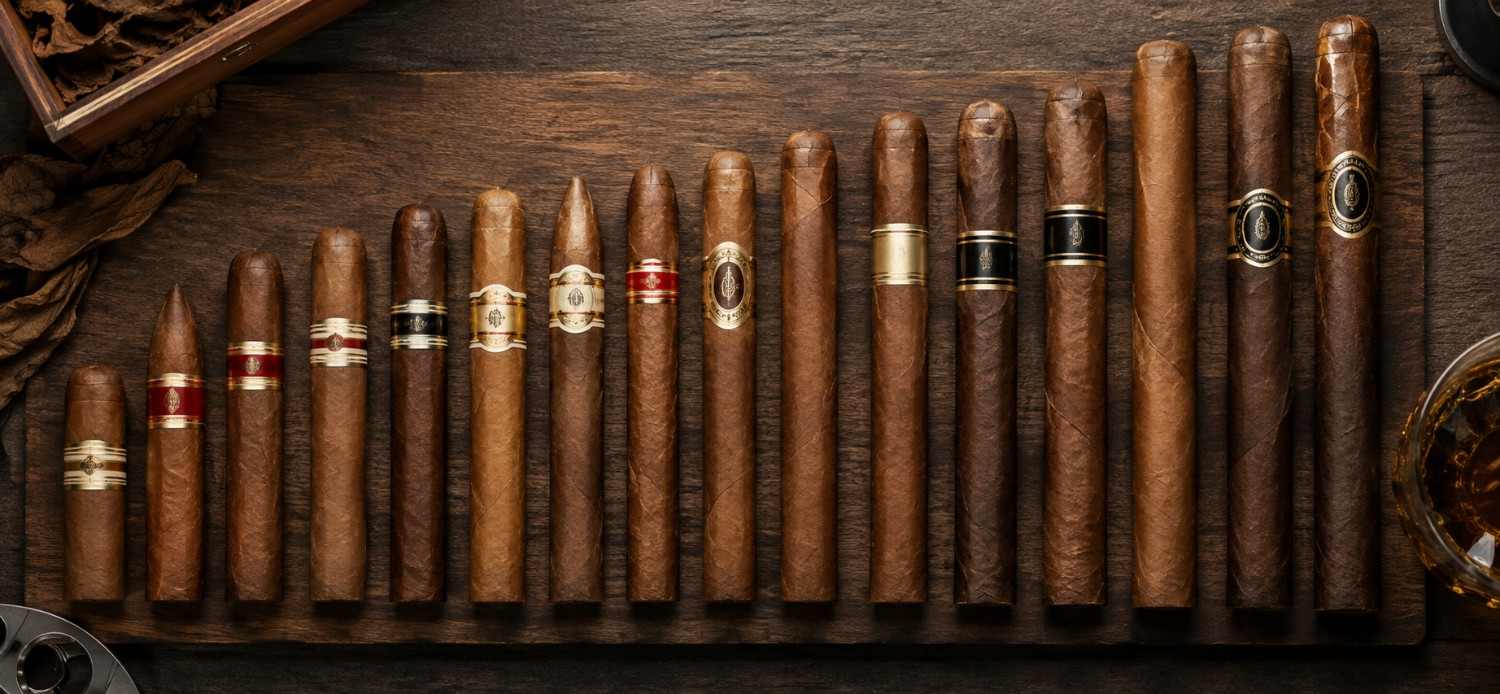
A cigar’s shape and size come down to two numbers: length in inches and ring gauge, which measures thickness in 64ths of an inch. Every cigar you’ll ever buy falls into one of two families built from those two numbers, Parejo (straight-sided) or Figurado (tapered or shaped), and each vitola, or size name, sits inside a fairly predictable range. Robusto runs about 4.5 to 5.5 inches at a 48 to 54 ring gauge. Churchill runs 6.5 to 7.5 inches at a 47 to 50 ring gauge. The full chart below covers every common size in both families, cross-checked against Cigar Aficionado, Cigars International, and Famous Smoke Shop so the numbers actually hold up.
Below the chart, you’ll also find a free size and shape finder tool. Punch in a length and ring gauge and it’ll tell you what vitola you’re holding.
Last updated: August 2026
What Do “Size” and “Shape” Actually Mean on a Cigar?
A cigar’s size is described with two measurements. Length is measured in inches, from the foot (the end you light) to the head (the end you cut). Ring gauge measures the diameter, but instead of inches, it uses 64ths of an inch. A 50 ring gauge cigar is 50/64 of an inch thick, which works out to roughly 0.78 inches. A 32 ring gauge is about half an inch. The system looks strange the first time you see it, but it’s just an old tobacco-industry standard that stuck around because it lets manufacturers describe thickness in whole numbers instead of fractions.
Shape is the separate question of whether the cigar is a straight cylinder or tapers somewhere along its length. That distinction is what splits every cigar on the market into one of two families, covered next.
Use the tool below any time you need to convert a ring gauge into inches or millimeters, or figure out what a specific length-by-ring-gauge combination is actually called.
Cigar Size & Shape Finder
Enter a length and ring gauge to find the vitola, or leave length blank to just convert ring gauge.
Enter a ring gauge above to get started.
Parejo vs. Figurado: The Two Cigar Shape Families
Parejo is Spanish for “even” or “level,” and it describes any cigar with straight, parallel sides and a uniform ring gauge from foot to head. Most cigars sold today are Parejos. A Robusto, Corona, Toro, and Churchill are all Parejos. Some Parejos are box-pressed, meaning the round shape gets squared off during packing, but the sides still run straight and even.
Figurado covers everything else. A Figurado tapers at one or both ends instead of holding a constant width. Pyramids, Torpedoes, Belicosos, and Perfectos all fall into this category. Figurados used to be a niche category, but tapered shapes have become a standard part of most premium cigar lineups over the past two decades.
Neither family is inherently stronger or milder than the other. Shape affects draw and how the flavor develops as you smoke, not the strength of the tobacco itself, more on that below.
The Complete Cigar Shapes and Sizes Chart
Brands round their measurements differently, so treat the ranges below as the market standard rather than a fixed rule. A “Toro” from one factory can run a half-inch longer than another brand’s Toro. That said, these ranges reflect where the overwhelming majority of production actually lands.
Parejo (Straight-Sided) Sizes
| Vitola | Length | Ring Gauge | Approx. Diameter |
| Petit Corona | 4 – 4.5 in | 40 – 42 | 0.63 – 0.66 in |
| Corona | 5.5 – 6 in | 42 – 44 | 0.66 – 0.69 in |
| Panetela | 5 – 7.5 in | 34 – 38 | 0.53 – 0.59 in |
| Lancero | 7 – 7.6 in | 38 – 40 | 0.59 – 0.63 in |
| Lonsdale | 6.25 – 7 in | 42 – 44 | 0.66 – 0.69 in |
| Robusto | 4.5 – 5.5 in | 48 – 54 | 0.75 – 0.84 in |
| Toro / Corona Gorda | 5.625 – 6.25 in | 46 – 54 | 0.72 – 0.84 in |
| Churchill | 6.5 – 7.5 in | 47 – 50 | 0.73 – 0.78 in |
| Double Corona | 7.5 – 8.5 in | 49 – 52 | 0.77 – 0.81 in |
| Gordo / Gigante | 4.75 in+ | 60+ | 0.94 in+ |
Figurado (Tapered) Sizes
| Vitola | Length | Ring Gauge | Notes |
| Pyramid | 6 – 7 in | ~40 at the head, widening to 52 – 54 at the foot | Cut foot, pointed head |
| Torpedo | 6 – 7 in | 52 – 56 | Similar to a Pyramid with a sharper point |
| Belicoso | 5 – 5.5 in | 48 – 52 | A short Pyramid with a rounder, less severe taper |
| Perfecto | 4.5 – 9 in | 38 – 54, varies by section | Tapers at both ends with a bulge in the middle |
| Culebra | 5 – 6 in | 38 (x3, braided) | Three Panetelas twisted together, meant to be shared |
| Diadema / Salomon | 7.5 – 9 in+ | Varies, tapers at both ends | The largest and rarest common Figurado |
Ring gauge on a Pyramid or Torpedo is often written as two numbers separated by a slash, like 40/54. That means the head starts at a 40 ring gauge and opens up to 54 by the foot.
Parejo Shapes, One at a Time
Corona is the benchmark size the entire industry measures itself against. At 5.5 to 6 inches and a 42 to 44 ring gauge, it’s thin enough that master blenders traditionally used it to taste-test a new blend, since the wrapper-to-filler ratio doesn’t skew the flavor the way a fatter cigar can.
Robusto is the best-selling cigar size in the United States. Short, thick, and quick to smoke without feeling rushed, it’s the size most non-collectors reach for by default.
Toro has effectively replaced Corona as the size blenders use to judge a new release, mostly because its 6-inch-by-50 profile gives a fuller, more balanced ratio of filler to wrapper. You’ll sometimes see this exact size called a Corona Gorda instead, especially on cigars with Cuban naming conventions; the two terms overlap heavily in practice.
Churchill takes its name from Sir Winston Churchill’s well-documented preference for long, cool-smoking cigars. At 7 inches, the extra length gives the smoke more room to cool before it reaches your palate. Our full breakdown of the size lives in the Churchill Cigar guide if you want the deep dive.
Panetela and Lancero are the thin, elegant end of the spectrum. Because a thinner ring gauge means less filler tobacco relative to wrapper, these sizes let a great wrapper leaf do more of the talking. The Lancero specifically has a cult following among longtime smokers who want to taste a blend in its purest form.
Double Corona and Gordo sit at opposite extremes of the size spectrum, one very long, one very fat, but both exist for the same reason: more tobacco means a longer, slower smoke session with a cooler draw.
Figurado Shapes, One at a Time
Pyramid cigars taper from a wide foot down to a narrow point at the head. That tapered head concentrates the smoke, so a lot of smokers find the flavor feels more layered and intense right where it hits the tongue.
Torpedo is close enough to a Pyramid that the two terms get used interchangeably in casual conversation, but a true Torpedo comes to a sharper, more pronounced point.
Belicoso is a shorter, rounder version of a Pyramid. Rather than a sharp taper, the head narrows gently, closer to a bullet shape than a cone.
Perfecto is the most dramatic Figurado. Both ends taper, and the middle often bulges out wider than either tip. Because the ring gauge changes constantly along the length of the cigar, the flavor and draw evolve more noticeably from the first third to the last than they do on a straight Parejo.
Culebra is less a shape than a presentation. Three thin Panetelas get braided together and tied off, sold and smoked as one unit, then untied and split between three people. It’s rare on shelves today, but it’s a genuine piece of cigar history worth knowing about even if you never smoke one.
Does Cigar Size Affect Strength or Flavor?
Not the way most people assume. Size determines the smoking experience, not the strength. A short, thin cigar can be full-bodied, and a long, fat cigar can be mild. Strength comes from the tobacco itself, the wrapper, binder, and filler leaves and how they’re fermented and aged, not from how much of that tobacco is packed into the cigar.
What size does change is the ratio of wrapper to filler, and that ratio shifts the flavor balance. A thin cigar like a Lancero has proportionally more wrapper leaf relative to its filler, so the wrapper’s character comes through more clearly. A thick cigar like a Toro or Gordo carries more filler tobacco relative to its wrapper, which tends to produce a fuller, more complex smoke with a cooler draw. Thinner cigars also burn hotter, since there’s less tobacco insulating the burn line, which is part of why they smoke faster and can taste sharper toward the last third.
If you’re still working out what strength range you even enjoy, our guide to the best cigars for beginners is a better starting point than chasing a specific size.
How to Pick the Right Size for You
Start with time, not taste. A Petit Corona or Robusto runs about 30 to 45 minutes. A Churchill or Double Corona can stretch past an hour and a half. Pick a size that fits the block of time you actually have, because rushing the back half of a long cigar rarely ends well.
From there, ring gauge is really a comfort question. Thinner cigars are easier to hold, cut, and light for a first-timer, and a Robusto or Corona gives a forgiving, well-balanced smoke without asking you to commit to anything unfamiliar. If you’re brand new to cigars entirely, get the fundamentals of cutting and lighting down first. Our how-to-smoke-a-cigar guide walks through the basics step by step before you worry about shape at all.
Figurados are worth trying once you know what you like in a straight Parejo, since the tapered draw and shifting flavor profile are easier to appreciate when you have something to compare them against.
Storing Different Shapes and Sizes
Shape and ring gauge both affect how many cigars actually fit in a given humidor, since a box of Gordos takes up meaningfully more room than the same box filled with Panetelas. If you’re planning a purchase around a specific humidor, our humidor capacity calculator does the math for you based on your box’s interior dimensions.
Figurados need a little more care in storage, since a pointed head or tapered foot is more prone to getting crushed if cigars are packed in too tightly. For more on how cigar boxes are built to handle this, see our guide to what a cigar box actually is and our roundup of the best cigar boxes on the market.
Frequently Asked Questions
What is the most popular cigar size? Robusto is the best-selling cigar size in the United States. At roughly 5 inches by a 50 ring gauge, it hits a middle ground between smoking time and thickness that suits both new smokers and longtime aficionados.
What does ring gauge mean on a cigar? Ring gauge measures a cigar’s diameter in 64ths of an inch. A 50 ring gauge cigar is 50/64 of an inch thick, or about 0.78 inches. The higher the number, the thicker the cigar.
Is a bigger cigar stronger? No. Strength comes from the tobacco blend itself, not the size of the cigar. A thin cigar can be full-bodied, and a large one can be mild. Size changes the wrapper-to-filler ratio and smoking time, not strength.
What’s the difference between a Toro and a Corona Gorda? They’re the same size range in practice, roughly 5.625 to 6.25 inches with a 46 to 54 ring gauge. Toro is the more common name in modern American cigar lines, while Corona Gorda shows up more often on cigars with Cuban naming traditions.
What’s the difference between a Torpedo and a Pyramid? Both taper from a wider foot to a narrower head. A Pyramid has a gentler, more gradual taper, while a Torpedo comes to a sharper, more defined point. Many cigar makers use the two terms interchangeably.
How long does a cigar last based on its size? A Petit Corona or Robusto typically burns for 30 to 45 minutes. A Toro or Churchill runs closer to an hour to 90 minutes. A Double Corona or large Perfecto can run past two hours.
Sources
Dimensions in this guide were cross-checked against three primary industry references:
- Cigar Aficionado, “Cigar Shapes, Sizes And Colors”
- Cigars International, “Cigar Sizes, Shapes, & Ring Gauges”
- Famous Smoke Shop, “Understanding Cigar Sizes and Shapes”
FAQs
What is the most popular cigar size?
Robusto is the best-selling cigar size in the United States. At roughly 5 inches by a 50 ring gauge, it hits a middle ground between smoking time and thickness that suits both new smokers and longtime aficionados.
What does ring gauge mean on a cigar?
Ring gauge measures a cigar’s diameter in 64ths of an inch. A 50 ring gauge cigar is 50/64 of an inch thick, or about 0.78 inches. The higher the number, the thicker the cigar.
Is a bigger cigar stronger?
No. Strength comes from the tobacco blend itself, not the size of the cigar. A thin cigar can be full-bodied, and a large one can be mild. Size changes the wrapper-to-filler ratio and smoking time, not strength.
What’s the difference between a Toro and a Corona Gorda?
They’re the same size range in practice, roughly 5.625 to 6.25 inches with a 46 to 54 ring gauge. Toro is the more common name in modern American cigar lines, while Corona Gorda shows up more often on cigars with Cuban naming traditions.
What’s the difference between a Torpedo and a Pyramid?
Both taper from a wider foot to a narrower head. A Pyramid has a gentler, more gradual taper, while a Torpedo comes to a sharper, more defined point. Many cigar makers use the two terms interchangeably.
How long does a cigar last based on its size?
A Petit Corona or Robusto typically burns for 30 to 45 minutes. A Toro or Churchill runs closer to an hour to 90 minutes. A Double Corona or large Perfecto can run past two hours.