The Best Fluffy Pancakes recipe you will fall in love with. Full of tips and tricks to help you make the best pancakes.

Walk into any cigar shop and you’ll hear the words mild, medium, and full thrown around constantly. They get applied to wrappers, to blends, to entire brands. They get used interchangeably with words like body and flavor until the whole thing becomes a fog of terminology that doesn’t help anyone make a better purchasing decision.
Here’s the reality: cigar strength means one specific thing. It refers to nicotine content and its physical impact on the smoker. Not flavor intensity. Not smoke density. Not how dark the wrapper is. Nicotine.
Once that distinction is clear, every other conversation about cigars gets easier.
Strength vs Body vs Flavor: Getting the Terms Right
This is the confusion that trips up most new cigar smokers, and it persists because even experienced smokers and reviewers use these terms inconsistently.
Strength refers to nicotine intensity and its physical effects. Lightheadedness, warmth, nausea in extreme cases. These are the physical sensations that nicotine produces regardless of what the cigar tastes like.
Body describes the weight and texture of the smoke itself – how it fills the mouth, how dense it feels, how long the flavors linger. A full-bodied cigar delivers rich, layered flavors and a thick, coating smoke. A light-bodied cigar is more subtle, softer, creamier, and easier for your palate to process.
Flavor refers to the specific taste notes – cedar, pepper, chocolate, earth, cream, spice. These are what your taste buds detect independently of how much nicotine is hitting your system.
Here is the distinction that matters most: body affects your mouth, nose, and throat. Strength affects your body internally.
A cigar can be full-bodied but mild in strength, or it can be a strong cigar with a light body. These are not contradictions. They’re just different variables in the same equation. A rich, creamy Connecticut wrapper can deliver full-bodied flavor with minimal nicotine impact. A deceptively smooth Nicaraguan puro can knock a new smoker sideways with nicotine while tasting almost gentle.
Understanding which variable you’re measuring changes how you shop for cigars entirely.
What Actually Determines Cigar Strength
The answer lives mostly in the filler blend – the tobaccos inside the cigar that you can’t see from the outside.
Leaf Position on the Plant
Where a leaf grows on the tobacco plant changes everything including strength, burn rate, and flavor. The higher the position, the more sun the leaf receives, and the stronger it becomes.
Ligero comes from the very top of the plant. These leaves soak up the most sun, grow thick and oily, and develop the highest nicotine content. They burn slower and taste bolder – earthy, spicy, sometimes a little sweet. Blenders use them in the core of full-bodied cigars, surrounded by faster-burning tobaccos.
Seco grows in the middle of the plant. These leaves are thinner, lighter, and more balanced in strength. They burn better than ligero and often carry delicate flavors that help round out the blend – soft spice, cedar, hay. Most of the flavor complexity in a blend comes from seco leaves.
Volado comes from the bottom of the plant. These leaves receive the least sun, carry the least nicotine, and burn the most easily. Blenders use them primarily to improve combustion rather than for flavor or strength contribution.
A full-bodied blend often packs in plenty of thick, nicotine-heavy ligero leaves, while milder cigars lean on seco and volado for a more laid-back experience.
Tobacco Variety
Different tobacco varieties bring different inherent strength and character. Criollo is one of the oldest strains, known for its strength and peppery bite. Corojo delivers bold, spicy flavor with more body. Connecticut Shade is milder, smoother, and perfect for when you want something lighter without sacrificing quality. Habano is a hybrid leaf with deep Cuban roots that delivers medium to full strength with earthy spice.
The origin matters too. Nicaraguan tobacco from the Jalapa and Estelí valleys tends toward stronger, more peppery profiles. Dominican tobaccos tend to be smoother and more refined at similar strength levels. Honduran tobacco sits between the two.
The Wrapper’s Role
The wrapper plays a smaller role in strength than most people assume, though it does contribute to the body and the initial flavor experience more than the filler.
Dark, oily wrappers can add a heavier feel, especially when paired with robust filler leaves. But the wrapper alone does not determine strength. A dark maduro wrapper on a mild filler blend produces a mild to medium cigar. A light Connecticut wrapper on a full Nicaraguan puro can be significantly stronger than most maduros on the market.
The most persistent myth in cigar shopping is that darker equals stronger. Color indicates the fermentation and aging process of the wrapper leaf. It does not directly determine how much ligero is in the filler blend or how much nicotine will hit your system when you smoke it.
Cigar Size and Ring Gauge
Cigar size and shape also play a significant role in how strength is delivered. Smaller, tightly packed cigars concentrate the smoke, intensifying the nicotine impact with each draw. Larger, looser rolls disperse the nicotine more evenly, resulting in a smoother, less aggressive experience.
Figurado shapes like perfectos and torpedoes, with their tapered ends, can channel smoke more directly, making even a milder blend feel more intense as it fills the mouth.
A robusto and a Churchill from the same blend will deliver different strength experiences because of the additional length in the Churchill allowing the smoke to cool more before it reaches you.
Smoking Pace
Smoking too quickly can intensify nicotine effects even in a cigar labeled as mild or medium. Slower puffing allows the body more time to process nicotine, often resulting in a smoother, more balanced experience.
This is why the same cigar can feel entirely different across two smokes. Rush a robusto in 25 minutes and you’ll feel it. Take the same cigar at one puff per minute over 55 minutes and the experience is entirely different tobacco in a completely different physical context.
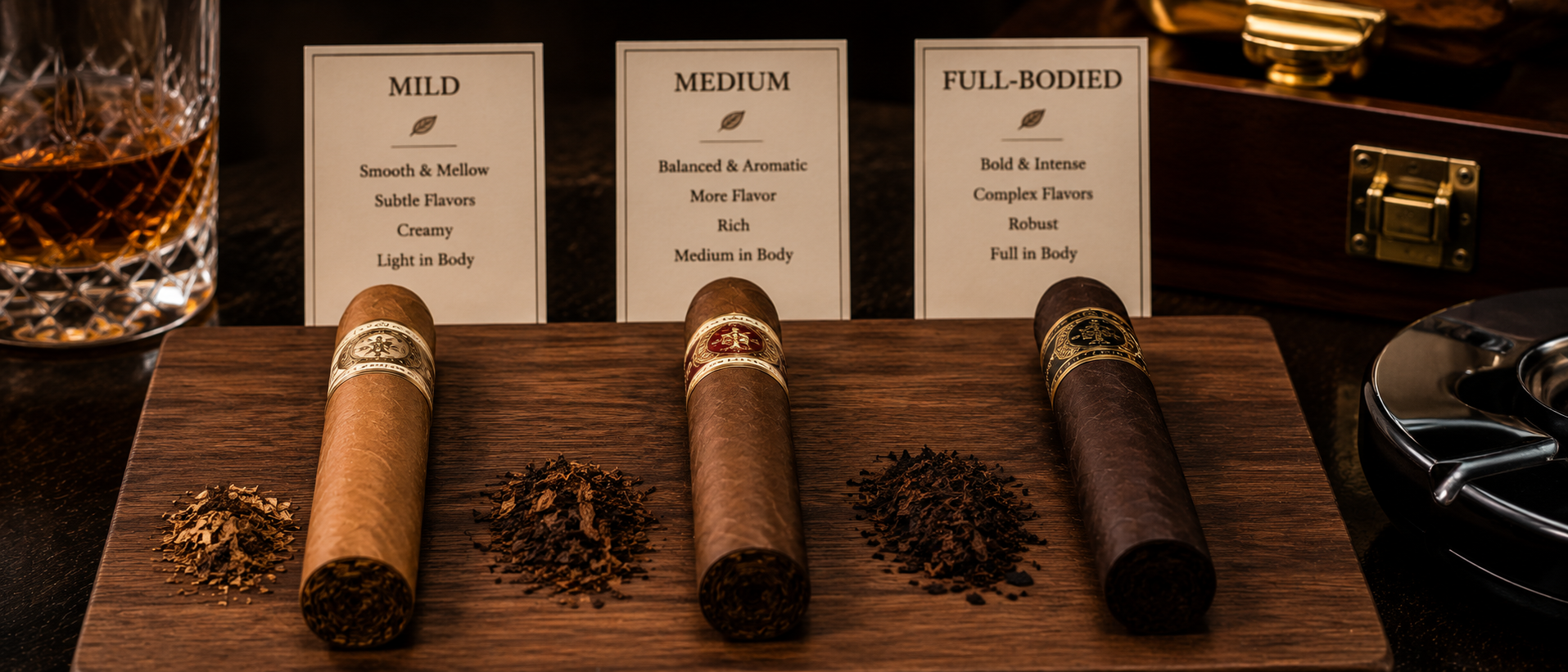
The Three Strength Categories
Mild
Mild cigars carry low nicotine content and deliver an easygoing smoking experience. The amount of nicotine in a mild cigar is largely undetectable as a physical sensation. Your palate picks up the flavor, but your body doesn’t register significant nicotine impact.
Flavor profiles in mild cigars tend toward cream, cedar, light toast, subtle sweetness, and gentle spice. The smoke is typically smooth and thin rather than dense and coating.
Connecticut Shade is the wrapper most closely associated with mild cigars. Ecuadorian Connecticut and Cameroon wrappers also appear frequently in mild to medium territory.
Best for: beginners, morning smoking, palate-cleansing smokes between fuller sticks, and anyone who wants flavor without nicotine impact.
Recommended mild cigars: Macanudo Café, Ashton Classic, Romeo y Julieta 1875, Arturo Fuente Chateau.
Medium
Medium strength cigars strike the balance between the two extremes and represent the largest single category in the premium cigar market. They deliver a noticeable nicotine presence that most experienced smokers find satisfying without the intensity that can overwhelm newer smokers.
The smoke from a medium cigar coats the mouth lightly and delivers more complexity and presence than a mild without becoming aggressive. Flavor notes expand to include coffee, leather, roasted nuts, earth, and more pronounced spice.
Most daily smokers settle into the medium and medium-to-full range. It’s where the broadest range of premium cigar production lives, from established brands like Arturo Fuente and Montecristo through to most of the Nicaraguan production that dominates the current market.
Medium cigars are versatile, ideal with bourbon, dark rum, or a bold espresso.
Best for: experienced beginners, everyday smoking, most social situations, and the majority of food and drink pairings.
Recommended medium cigars: H. Upmann 1844, Montecristo White Series, Padrón 3000, Oliva Serie G.
Full
Full-strength cigars carry the highest nicotine content and are best reserved for experienced smokers with established tolerance. The smoke is dense and thick, fully coating the mouth and leaving a strong aftertaste. Pepper, dark cocoa, espresso, earth, and leather dominate the flavor profile.
Full-strength cigars often feature long-aged ligero leaves in significant proportions throughout the filler blend. The construction needs to be excellent to keep these blends burning evenly despite the density of the tobacco.
If you’re new to cigars and smoke a full-strength stick on an empty stomach, expect to feel it. Lightheadedness, nausea, and sweating are the body’s response to nicotine overload. It passes within 20 to 30 minutes but it’s unpleasant. Eat before smoking a full-strength cigar. Drink water throughout. And build toward this category gradually rather than starting here.
Full-strength cigars pair exceptionally well with cask-strength whisky, aged rum, and strong black coffee.
Best for: experienced smokers with established nicotine tolerance, evening smoking sessions, and occasions that warrant a powerful, complex experience.
Recommended full-strength cigars: Padrón 1964 Anniversary, Liga Privada No. 9, My Father Le Bijou 1922, Oliva Serie V Melanio.
The In-Between Categories
Most serious cigar smokers spend their time in the areas between the three main categories rather than at the extremes.
Mild to medium covers cigars that deliver more complexity than a pure mild without noticeable nicotine impact. This is where most beginners should aim after their first few smokes. The flavor develops without the risk of being overwhelmed.
Medium to full is where the most interesting cigars in the current market tend to live. Enough strength to be satisfying for experienced smokers, enough refinement to reward attention to flavor. Most of the critically acclaimed Nicaraguan production from the past decade sits in this range.
Strength and Tolerance: How Your Palate Develops
Personal tolerance increases over time, meaning a cigar that feels strong to a beginner may feel moderate to an experienced smoker.
This isn’t just anecdotal. Regular exposure to nicotine builds tolerance at the receptor level. A Liga Privada No. 9 that floors a new smoker will feel like a pleasant medium to full experience for someone who has smoked premium cigars regularly for two years.
The practical implication is that your strength preferences will shift as you smoke more. Starting mild and working gradually toward medium and full isn’t just a safety precaution – it’s how you develop the palate to actually appreciate what full-strength cigars are doing in terms of flavor.
Jumping straight to a Padrón 1964 or a Liga Privada as your first cigar is reliable way to decide you don’t like cigars before you’ve had a fair chance to develop a palate for them.
How to Progress Through the Strength Levels
Start mild. A Connecticut robusto from Macanudo or Ashton gives you a framework for what cigar tobacco tastes like without nicotine interference making you feel unwell. Smoke three to five mild cigars before moving on.
Move to mild-medium next. The Arturo Fuente Chateau or a Montecristo Robusto introduce more complexity without a significant nicotine jump. This is where most beginner palates start to distinguish individual flavor notes.
Introduce medium after that. H. Upmann, Padrón 3000, or Oliva Serie G all deliver genuine medium profiles that reward attention without overwhelming a developing palate.
Work toward medium-full before jumping to full-strength. The Padrón 1964 Natural or a My Father Cigars robusto give you the full-strength flavor experience at a strength level that’s still manageable if you’re not fully calibrated yet.
Full-strength at the end. Liga Privada No. 9, My Father Le Bijou 1922, and the full Nicaraguan puros are the destination, not the starting point.
For a specific list of recommended cigars across the mild to medium range, our best cigars for beginners guide covers 10 options with tasting notes and strength levels clearly labeled. And for a deeper look at one of the most misunderstood strength categories, our maduro cigar guide breaks down why dark wrapper cigars aren’t always the strongest option in the humidor.
Practical Tips for Managing Strength
Eat before you smoke. Smoking on an empty stomach significantly amplifies strength perception. A full stomach slows nicotine absorption and makes even a medium-full cigar feel more manageable.
Drink water throughout. Hydration helps flush nicotine from the system and keeps the palate clean between puffs.
Smoke slowly. One puff every 30 to 60 seconds is the correct rhythm. Faster than that and even a mild cigar can produce more nicotine impact than intended.
If you feel lightheaded, put the cigar down. There are no extra points for finishing a cigar that’s making you feel unwell. Set it down, drink some water, eat something. The sensation passes.
Start the cigar slowly. The first third of any cigar burns hotter and more intensely than the middle third. Taking it easy through the first fifteen minutes gives the tobacco time to settle into a consistent burn and reduces the initial nicotine spike.
Our Verdict
Cigar strength is one variable among three – alongside body and flavor – and it’s the one that most directly affects your physical experience of the smoke. Getting clear on what it means and what causes it makes every cigar purchase a more informed one.
Start mild. Work up gradually. Pay attention to how your body responds to each new strength level rather than assuming a label tells you everything you need to know.
The most satisfying place in the cigar world for most experienced smokers is medium to full – enough complexity to reward attention, enough strength to feel satisfying without dominating the experience. Getting there takes time and some mileage across the strength spectrum. The journey is the point.
Frequently Asked Questions
What does cigar strength mean?
Cigar strength refers specifically to the nicotine content of a cigar and its physical impact on the smoker. It’s categorized as mild, medium, or full and describes how the cigar affects your body – lightheadedness, warmth, and nicotine buzz – rather than what it tastes like. Strength is different from body, which describes flavor intensity and smoke density, and from flavor, which refers to the specific taste notes.
What is the difference between cigar strength and body?
Strength refers to nicotine content and physical impact on the smoker. Body describes the weight, texture, and density of the smoke and how it feels on the palate. A cigar can be full-bodied with complex, rich flavors but mild in strength with low nicotine. Conversely, a cigar can be strong in nicotine with a lighter, simpler flavor profile. Strength affects you internally. Body affects your mouth and palate.
Does a darker wrapper mean a stronger cigar?
No. This is the most common misconception in cigar shopping. Wrapper color indicates the fermentation and aging process of the outer leaf, not the nicotine content of the filler blend inside. A dark maduro wrapper on a mild filler blend produces a mild to medium cigar. A light Connecticut wrapper on a full Nicaraguan puro can be significantly stronger than most maduros on the market.
What makes a cigar full strength?
Full-strength cigars contain high proportions of ligero tobacco leaves in the filler blend. Ligero leaves grow at the very top of the tobacco plant, receive the most sunlight, and develop the highest nicotine content. They burn slowly and deliver dense, bold smoke. Full-strength cigars also tend to use Nicaraguan or Honduran tobaccos from high-priming positions more heavily than milder blends.
What cigar strength should a beginner start with?
Mild. A mild Connecticut wrapper robusto from brands like Macanudo, Ashton, or Romeo y Julieta gives beginners a framework for what premium cigar tobacco tastes like without nicotine impact making the experience unpleasant. After three to five mild cigars, move gradually toward mild-medium and then medium. Never start with a full-strength cigar.
Can smoking a cigar too fast make it feel stronger?
Yes. Puffing too quickly overheats the tobacco, which concentrates nicotine delivery with each draw and produces harsher, more intense flavors. Smoking at one puff every 30 to 60 seconds gives your body more time to process the nicotine and produces a significantly more pleasant experience at any strength level.
What is the strongest cigar in the world?
There’s no definitive answer because strength varies by batch and individual perception. Consistently ranked among the strongest are Liga Privada No. 9 by Drew Estate, My Father Le Bijou 1922, Padrón 1964 Anniversary Maduro, and various Nicaraguan puros using heavy ligero blends. Any cigar relying heavily on high-priming Nicaraguan ligero in the filler will land in the full to extra-full strength range.
What happens if a cigar is too strong for you?
If a cigar is producing lightheadedness, nausea, or excessive sweating, you’re experiencing nicotine overload – commonly called being “green.” Put the cigar down immediately. Drink water, eat something, sit down. The sensation passes within 20 to 30 minutes. It’s not dangerous but it’s unpleasant and entirely avoidable by building toward stronger cigars gradually rather than jumping to full-strength too quickly.
Ready to find cigars that match your current strength level? Our best cigars for beginners guide covers 10 solid options across the mild to medium range with tasting notes and strength levels clearly identified for each one.