The Best Fluffy Pancakes recipe you will fall in love with. Full of tips and tricks to help you make the best pancakes.

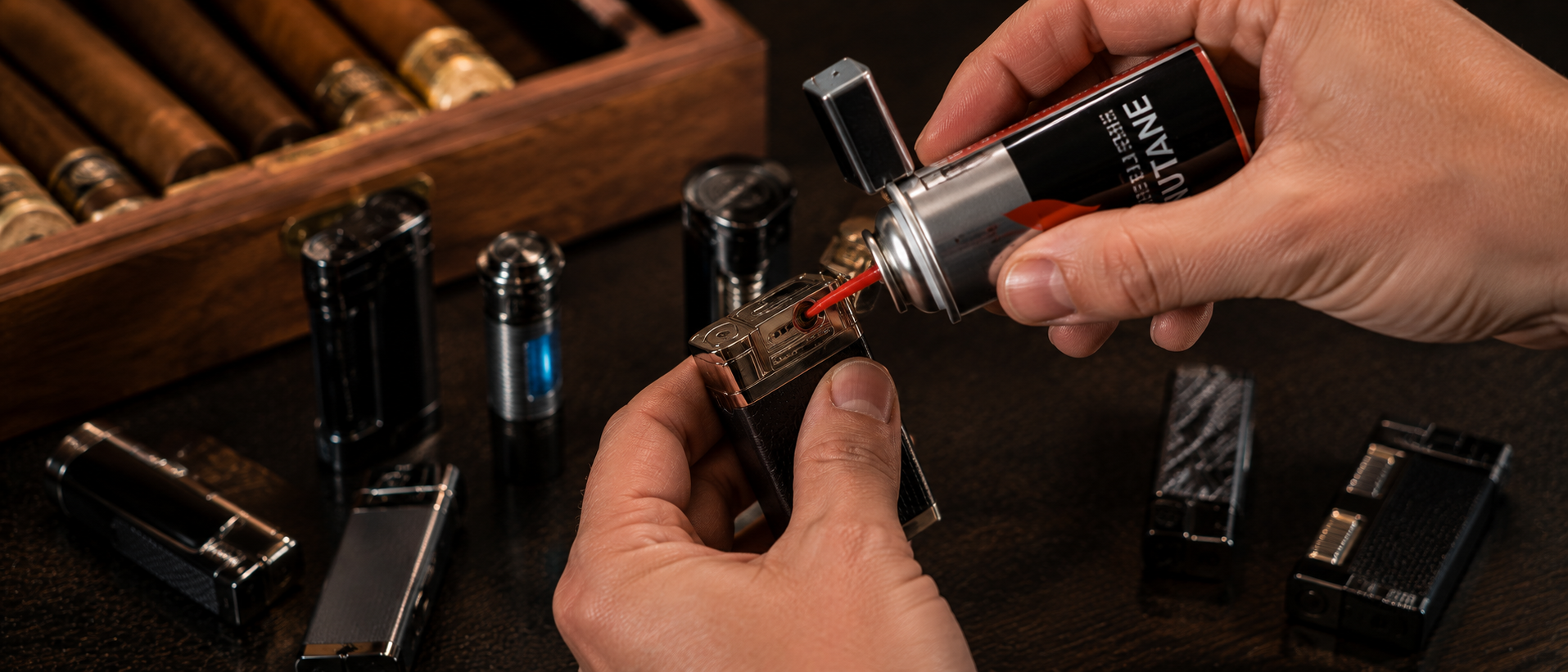
A good butane lighter is one of the better investments in a cigar smoker’s kit. A Xikar HP3 or a Colibri torch lasts years if you treat it right. The way most people ruin a quality lighter isn’t by dropping it. It’s by refilling it wrong.
A poorly refilled lighter sputters, flames inconsistently, or won’t ignite at all. The fix isn’t buying a new one. It’s understanding why the refill failed and doing it correctly next time.
This guide covers everything – the right technique, the common mistakes, the butane brands worth buying, and what to do when the lighter still won’t work after a refill.
What You Need Before You Start
Keep these ready before you begin. The process goes faster and safer when everything is at hand.
A butane canister – refined, high-grade butane only. More on this below.
A small screwdriver, pen cap, or paperclip for pressing the purge valve.
A paper towel or cloth for wiping excess butane from the lighter body.
A flat, stable surface in a well-ventilated area away from any open flame, heat source, or spark.
That last point isn’t optional. Butane is highly flammable and heavier than air, which means it sinks and pools rather than dispersing upward. Always refill away from stoves, candles, other lighters, and anything that could produce a spark.
The Most Important Step Most People Skip: Purging
Purging is the single most critical step in the entire refill process and the one most people either don’t know about or skip in a hurry.
Over time, air becomes trapped inside the fuel tank, creating backpressure that prevents a full refill and causes an inconsistent, sputtering flame. Trapped air prevents fuel from entering. Always purge before refilling, even if the lighter seems empty.
Here’s how to do it:
Hold the lighter upside down. Find the small refill valve on the bottom – it looks like a small brass or metal pin in the center of the fill port. Press the valve with your screwdriver, pen cap, or paperclip. You’ll hear a hissing sound as the remaining gas and trapped air escape. Hold it down until the hissing stops completely. That’s the tank fully bled of air and old fuel.
If you skip this step, the trapped air creates backpressure that makes the new butane fight its way in. The result is a partial fill, an inconsistent flame, and frustration wondering why a quality lighter is performing like a gas station throwaway.
Step-by-Step: How to Refill a Butane Lighter
Step 1: Let the Lighter Cool Down
If you recently used the lighter, wait at least 30 minutes before refilling. Butane is highly combustible, and a warm lighter increases internal pressure in ways that make the refill less efficient and more dangerous.
Refill lighters in the morning when they’re naturally cooler. Room temperature lighters accept fuel better than warm ones.
Step 2: Turn the Flame Adjuster to the Lowest Setting
Find the flame adjustment dial, usually located on the bottom or side of the lighter depending on the model. Turn it to the lowest setting using a small screwdriver.
Setting the flame adjuster to the lowest setting reduces internal pressure and ensures a smoother refill. It also keeps the fill opening as tight as possible, which reduces the amount of air that gets into the tank during the process.
Step 3: Purge the Tank
As described above – hold upside down, press the valve with a small tool, hold until the hissing stops completely. Don’t rush this. A complete purge is the foundation of a clean refill.
Step 4: Shake the Butane Canister
Give the butane canister 5 to 10 seconds of shaking before use. This mixes the fuel and prevents splattering during the fill. A quick shake is a small step that makes the fuel transfer cleaner and more consistent.
Step 5: Position the Lighter Upside Down
This is non-negotiable. Always refill the lighter upside down.
Butane is heavier than air. When the lighter is inverted, the refill valve is at the top and the liquid butane in the canister flows directly into the fuel chamber in its liquid state rather than flashing off as gas. Right-side up fills with air instead of fuel. It seems counterintuitive until you understand the physics, and then it’s obvious.
Hold the lighter firmly in one hand, inverted, with the refill valve facing up.
Step 6: Insert the Butane Canister Nozzle
Most butane canisters come with multiple adapter tips for different valve sizes. Select the adapter that fits your lighter’s refill valve snugly. A poor fit means butane sprays around the outside of the valve rather than entering the tank.
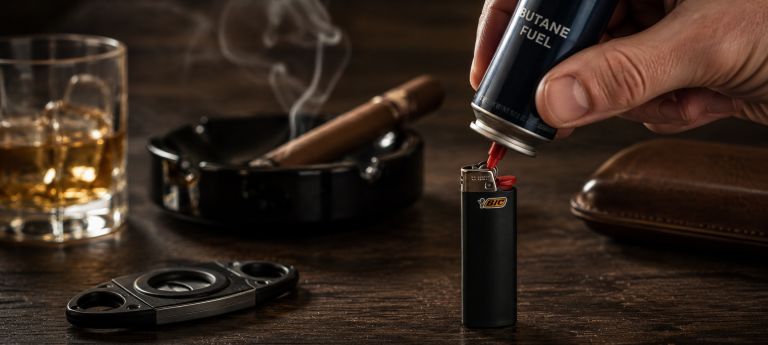
Hold the butane canister upside down – so both the lighter and the canister are inverted during the fill. Position the canister nozzle directly over the lighter’s refill valve and press firmly to create a tight seal before injecting any fuel.
If you own an S.T. Dupont lighter, note that Dupont uses a proprietary valve that only works with their brand of butane canister. Using a standard canister creates a seal failure and butane sprays everywhere. This is a known issue that catches people off guard.
Step 7: Fill in Short Bursts
Press down on the butane canister in 3 to 5 second bursts. Release between bursts. Repeat until the tank is full.
Short refill bursts are more efficient than one long press and reduce the chance of frost buildup around the valve. They also give you more control over how much fuel is entering the tank, which prevents overfilling.
Signs the tank is full: the lighter feels cold to the touch, butane starts spraying out around the valve rather than entering it, or the tank feels noticeably heavier. Stop as soon as you see any of these signs.
Do not overfill. Overfilling causes leaks, malfunctions, and in extreme cases can damage the tank. Stop the moment you get any fuel spraying back.
Step 8: Wipe and Wait
Set the lighter down on a flat surface and wipe off any excess butane from the outside of the lighter with a paper towel. Then wait.
Let the lighter sit for 2 to 5 minutes before attempting to ignite it. This gives the butane time to settle and reach room temperature. Cold butane doesn’t ignite reliably. The lighter will feel noticeably cold to the touch right after filling – that’s the compressed butane expanding as it enters the room temperature tank. Waiting removes that variable entirely.
Step 9: Adjust the Flame and Test
Turn the flame adjuster back up from the lowest setting to your preferred height. Start lower than you think you need and work up – it’s easier to increase flame height than to deal with a flare from an adjuster that’s set too high after a fresh fill.
Press the ignition button. The flame may take a second or two to stabilize after a fresh refill. Let it settle, then adjust to your preferred setting.
If the flame sputters, let the lighter sit for another few minutes or repeat the purge process to clear any remaining air pockets. A sputtering flame after a fresh refill almost always means trapped air, not a defective lighter.
Butane Quality: Why It Matters More Than Most People Think
The more refined your butane, the cleaner it burns and the less likely it is to clog your lighter. Several excellent high-grade butane brands are Lotus, Xikar, and Vector.
Cheap butane contains impurities – moisture, sulfur compounds, and other contaminants that build up inside the lighter’s mechanism over time. The jets clog. The ignition becomes unreliable. The flame gets inconsistent. And the lighter ends up in a drawer that becomes a graveyard for what were once good tools.
A $60 Xikar lighter filled with cheap butane will eventually clog and underperform. The same lighter filled with Xikar or Vector refined butane will run cleanly for years.
Buy quality butane. It costs slightly more per can and the cost per fill is still under a dollar. There’s no rational argument for using cheap fuel in a premium lighter.
Lotus, Xikar, and Vector refined butane are all available at Famous Smoke Shop and Cigars International alongside their lighter selections.
Common Problems and How to Fix Them
Lighter Won’t Ignite After Refill
Almost always one of three causes. The butane is still too cold – wait another five minutes. There’s still trapped air in the tank – repeat the purge process completely and refill again. The flame adjuster is still on the lowest setting – turn it up and test again.
Flame Is Weak or Sputtering
Air pocket in the tank. Hold the lighter upside down, press the purge valve until the hissing stops, then refill using proper technique. A thorough purge before the next fill typically resolves this completely.
Butane Sprays Out During Filling
You’ve hit full capacity. Stop immediately. Wipe off the excess and wait five minutes before testing. Don’t attempt to force more fuel in – the tank is at pressure and adding more creates a leak risk.
Lighter Feels Empty After Refilling
Wrong adapter on the canister nozzle. Butane was spraying around the outside of the valve rather than entering the tank. Select the correct adapter size, ensure a snug seal before pressing, and repeat the fill process.
Flame Is Too High After Refill
Turn the flame adjuster down. A common mistake is adjusting the flame up after refilling when the adjuster was already set higher than the lowest position. Start from the lowest setting and work up to your preferred height gradually.
How Often to Refill
The right refill rhythm depends on how often you smoke. A daily smoker lighting one cigar per session will go through a torch lighter’s fuel in two to four weeks depending on the tank size. Occasional smokers might go months between refills.
The easiest indicator is flame height. When you start noticing the flame dropping lower than your preferred setting at the same adjuster position, the tank is getting low. Refill before it runs completely dry rather than waiting for it to fail mid-light.
Keeping a spare butane canister with your cigar accessories means you never run out at the wrong moment. Nothing ends a pregame ritual faster than a dead lighter.
Maintaining Your Lighter Between Refills
A few habits extend the life of any butane lighter significantly.
Keep the lighter at room temperature during storage. Extreme heat increases internal pressure to dangerous levels. Extreme cold makes the lighter perform poorly and the butane less efficient. A jacket pocket, a cigar case, or a desk drawer are all fine. A glove compartment in summer is not.
Keep the jets clean. After a refill, check the jet opening for any residue or debris. A toothpick carefully applied to the outside of the jet clears most blockages without damaging the mechanism. Never blow into the jet directly – moisture from breath causes corrosion over time.
Cap or retract the ignition mechanism when not in use. Accidental ignition attempts against fabric or other surfaces wear down the piezo mechanism faster than regular use does.
For everything about choosing the right lighter for your cigar smoking setup, our guide on best cigar lighters covers the top options at every price point including the Xikar HP3, Colibri Quasar, and S.T. Dupont lines.
When to Replace Instead of Refill
Most quality lighters are worth refilling indefinitely with proper care. A few signs indicate it’s time to replace rather than refill.
The jet is permanently clogged and cleaning attempts haven’t resolved it. The piezo ignition no longer produces a spark. The valve seal is damaged and butane leaks out regardless of how carefully you fill it. The lighter was damaged physically in a way that compromised the tank integrity.
For lighters in the $15 to $30 range, replacement is often more practical than repair. For a Xikar HP3 or an S.T. Dupont, the lifetime warranty from Xikar specifically covers defects and malfunctions, meaning the lighter can often be repaired or replaced at no cost rather than abandoned.
Before you light your next cigar with a freshly refilled torch, our guide on how to light a cigar covers the toasting and lighting technique that protects the cigar from the first flame to the final third.
Our Verdict
Refilling a butane lighter takes three minutes when done correctly. The purge step is the one most people skip and the reason most refill failures happen. Do it every time, without exception, and the rest of the process is straightforward.
Use refined butane. Refill upside down. Fill in short bursts. Wait before testing. Those four habits determine whether your lighter performs like the quality tool it is or ends up in the drawer with everything else that stopped working.
Frequently Asked Questions
How do you refill a butane lighter?
Hold the lighter upside down and purge any remaining gas by pressing the refill valve with a small screwdriver until the hissing stops. Set the flame adjuster to the lowest setting. Shake the butane canister, position it upside down over the lighter’s refill valve with the correct adapter, and press in 3 to 5 second bursts until the tank is full. Wipe off excess butane, wait 2 to 5 minutes, then adjust the flame and test.
Why won’t my butane lighter work after refilling?
The most common cause is trapped air in the tank from an incomplete purge before refilling. Hold the lighter upside down, press the refill valve until the hissing stops completely, then refill using proper upside-down technique. Other causes include butane that’s still too cold to ignite – wait five more minutes – or the flame adjuster still being on the lowest setting from the refill process.
How do I know when my butane lighter is full?
The lighter feels cold to the touch from the compressed butane entering the tank. Butane begins spraying out around the valve rather than entering it. The tank feels noticeably heavier than when you started. Stop refilling at the first sign of any of these – overfilling causes leaks and potential damage to the tank mechanism.
Why do I need to refill a lighter upside down?
Butane is heavier than air and exists as a liquid under pressure inside the canister. When both the lighter and canister are inverted, the liquid butane flows directly into the lighter’s fuel chamber. Right-side up, only gas enters the tank rather than liquid fuel, resulting in a partial fill and poor performance.
What is the best butane for cigar lighters?
High-grade refined butane from Lotus, Xikar, or Vector are the most recommended brands for premium cigar lighters. Refined butane contains fewer impurities that would otherwise build up inside the lighter’s jets and valve mechanisms over time. Using cheap butane in a quality lighter shortens its life significantly and causes performance issues that refilling with better fuel eventually resolves.
How long does butane last in a lighter?
Depends on the tank size and how frequently the lighter is used. A daily smoker lighting one cigar per session will typically refill a standard torch lighter every two to four weeks. The flame adjuster dropping lower than your preferred position at the same dial setting is the clearest sign the tank is getting low.
Can I refill any butane lighter?
No. Only refillable butane lighters have a refill valve, typically a small brass pin on the bottom of the lighter. Disposable lighters do not have this valve and cannot be refilled. Check the bottom of your lighter for a small metal valve before attempting to refill it. If there’s no valve, it’s a disposable and should be replaced.
Is it dangerous to refill a butane lighter?
Done correctly in a well-ventilated area away from open flame and heat sources, refilling a butane lighter is safe. The risks come from refilling near open flames or heat sources that could ignite the butane, overfilling which causes leaks, or refilling a lighter that’s still warm from recent use. Follow the steps in this guide and the process is straightforward and safe.
How do I stop my butane lighter from leaking after refilling?
A leak after refilling usually means overfilling, a damaged valve seal, or the wrong adapter creating a poor seal during the fill. For overfilling, let the excess pressure release by gently pressing the valve until the leak stops. For valve seal damage, the lighter may need professional service or replacement. For adapter issues, use the correct size adapter and ensure a snug fit before pressing.
Ready to put your refilled lighter to work? Our guide on how to light a cigar covers the complete toasting and lighting technique – from foot position to confirming an even light before your first puff.