The Best Fluffy Pancakes recipe you will fall in love with. Full of tips and tricks to help you make the best pancakes.

Most new cigar smokers start with a guillotine cutter. It’s the obvious choice – you’ve seen them everywhere, they’re easy to find, and the straight cut is forgiving enough for beginners to get right without much practice.
Then someone hands them a cigar punch at a lounge and they realize there’s another way to do this. A cleaner way. A way that keeps the cap almost entirely intact and produces a draw that some smokers swear delivers better flavor concentration than any guillotine cut they’ve ever used.
Here’s everything you need to know about the cigar punch – what it is, how it works, when to use it, and which ones are worth buying.
What Is a Cigar Punch?
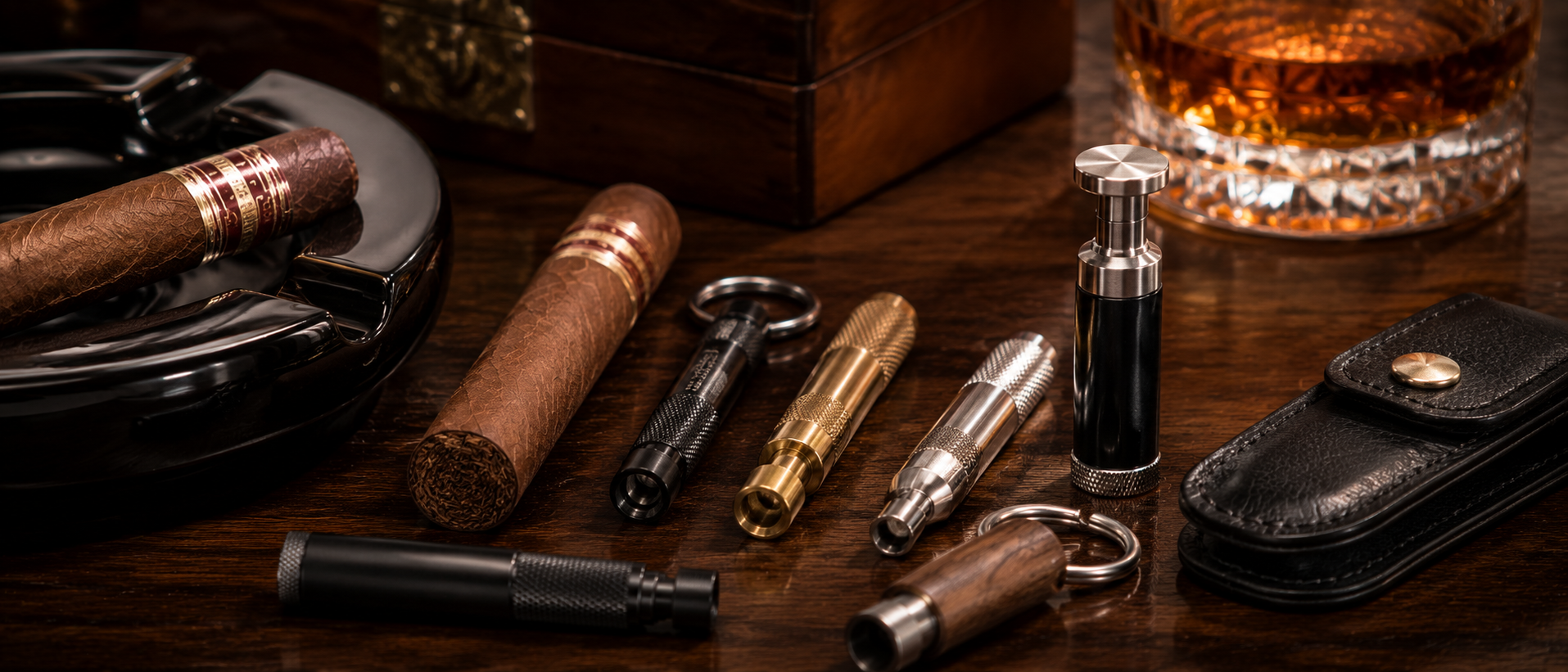
A cigar punch is a small tool, roughly the size and shape of a laser pointer, that cuts a clean circular hole in your cigar. Unlike guillotine cutters that remove the entire cap, a punch removes only a small cylindrical section.
The tool features a retractable blade – typically ranging from 7mm to 12mm in diameter – that pierces through the wrapper and cap when twisted or pressed. Most punch cutters use a sharp, circular blade housed inside a small cylinder. When rotated against the cigar cap, the blade cuts through the tobacco and creates a clean, round opening. The blade retracts back into the housing after use, and many models include a mechanism to eject the cut tobacco plug.
The result is a small, concentrated opening at the center of the cap rather than the fully exposed cap surface that a guillotine cut produces. That distinction drives everything else about how the punch behaves – the draw, the flavor, the experience of smoking through it.
How a Cigar Punch Changes the Smoking Experience
The purpose of a cigar punch is to cut a recessed hole in the cap, usually about a quarter of an inch deep or more, depending on the cutter. This concentrates the smoke through the center of the head.
A straight cut exposes more surface area at the head. This allows more smoke to flow through the cigar’s head. A punch creates a tighter, more focused draw that some aficionados prefer for flavor intensity.
The smaller opening also means fewer tobacco bits end up in your mouth during the smoke. That’s one of the most practical and immediate advantages of the punch over a guillotine cut – the concentrated hole acts as a natural filter for loose filler tobacco that would otherwise find its way onto your tongue and ruin a portion of the smoke.
If the draw is good in both cases the flavor profile should be pretty similar overall. However, one advantage to the punch cutter is that the recessed cut helps prevent tiny bits of tobacco from getting into your mouth.
Punch vs Guillotine vs V-Cut: How They Compare
Understanding where the punch fits relative to the other main cutting methods helps you decide when to reach for it.
A guillotine cut removes the entire cap and produces the most open draw of the three options. Maximum airflow, maximum smoke volume, maximum surface area. Some smokers find the fully open draw too loose and prefer the concentration of a punch.
A V-cut creates a deep wedge-shaped channel in the cap rather than removing it entirely. It falls between the punch and the guillotine on the draw spectrum – more open than a punch, more concentrated than a full cap removal. V-cuts deliver a deeper, concentrated channel that many smokers find enhances complexity in full-bodied cigars.
A punch cut is the tightest draw of the three. Clean, precise, and portable. Many smokers keep all three to match different cigars or moods.
Choose a punch when you want a tidy cut and a slightly restricted draw – perfect for fuller flavor concentration without fuss.
When to Use a Punch – and When Not To
This is where the punch has clear rules worth knowing before you buy one.
Use a Punch On
Standard round parejos in the 48 to 60 ring gauge range. Robustos, toros, Churchills, and Gordos all work well with a punch cut. The cap surface on these cigars is wide enough to accommodate the punch blade comfortably without risk of cracking the wrapper.
Box-pressed cigars work fine with a punch despite what some smokers assume. The squared shape doesn’t affect the cap in a way that creates problems for a circular punch blade.
Short filler and mixed filler cigars are particularly well suited to the punch. The smaller opening keeps loose filler tobacco from coming through the draw, which is more of a concern with shorter filler construction than with premium long-filler cigars.
Never Use a Punch On
Figurado cigars with pointed or tapered heads – torpedoes, belicosos, pyramids – are not compatible with a punch. The tapered head of a torpedo makes it difficult to get a proper cut with a punch without cracking the wrapper or creating a draw that’s too shallow. A straight cut with a guillotine or a V-cutter is a much better choice for these shaped cigars.
Lanceros and cigarillos with a ring gauge under 38 to 40 are too narrow for most standard punch blades. A punch was just not going to do the job on a small ring gauge lancero. A guillotine cut is the right tool for that format.
Cigars with damaged or dry caps present a cracking risk. If the cap already shows signs of dryness or cracking, the pressure of the punch blade can worsen the damage significantly. Make sure any cigar is properly humidified before punching.
How to Use a Cigar Punch
The technique is simpler than a guillotine cut because there’s no cap line to locate and no judgment call about how much to remove.
Step 1: Position the Punch
Hold the cigar with a firm but gentle grip and hold the cap – the closed end – face out. Line the punch in the center of the cap. It doesn’t matter if the hole is slightly off-center, as it won’t affect the draw significantly.
Step 2: Apply Gentle Pressure with Rotation
Apply light pressure on the punch while simultaneously and slowly rotating the cigar – or the punch – back and forth. This allows the blade to score the cap cleanly without forcing it through in one aggressive motion.
Step 3: Pierce the Cap
After scoring the surface, apply slightly more pressure to insert the blade deeper into the cap. Be cautious, as too much force can crack or unravel the wrapper. Once you meet some natural resistance from the base of the punch, you know you’ve gone far enough. The punch should penetrate through the cap completely without going beyond it.
Step 4: Remove the Plug
Carefully pull the punch cutter straight out. The small plug of tobacco from the cap should come with it. You can then dispose of the plug and your cigar is ready to light.
Resist the urge to karate chop or force the punch, which can crack the cigar wrapper. Gentle rotation with steady pressure is the right approach every time.
The Clover Punch for Large Ring Gauges
For fatter cigars like Gordos at 60 ring gauge and above, a single punch sometimes produces a draw that’s too restricted. The solution is the clover punch – making three or four punches in the cap in a clover-like pattern. Some smokers make two intersecting punches on larger cigars to increase draw without switching to a full guillotine cut.
A 7mm punch cutter blade will have a diameter of .27 inches while the 11mm blade will be .43 inches in diameter, or a little under a half an inch. Sizing up to a larger blade is the cleaner solution if you regularly smoke 60 ring gauge cigars – the Colibri Quasar offers three different blade sizes at 7mm, 9mm, and 12mm in a single unit specifically to handle this problem.
Choosing the Right Punch Size
Blade diameter is the primary specification to understand when buying a punch cutter.
A 7-9mm punch works well for most standard cigars. If starting with a single-size punch, choose 8mm or 9mm for versatility. A 7mm would be good for most Coronas, Robustos, and Toros, while an 11mm would be better for Gordos and other cigars at 60 ring and higher.
If you smoke a variety of ring gauges, a multi-size punch like the Xikar Twist or Colibri Quasar is worth the extra investment. Carrying one tool that covers three blade sizes is more practical than swapping between different punches depending on what you’re smoking.
Best Cigar Punch Cutters Worth Buying
1. Xikar 009 Pull-Out Punch – Best Overall
Blade: 9mm
Price: $25-40
Xikar is the gold standard when it comes to cigar accessories. Their punch cigar cutters are built with high-performance stainless steel, ergonomic bodies, and spring-loaded punches. Few brands match Xikar’s pedigree for reliability and design.
The 009 features spring-loaded action with a 9mm blade that tucks into a key-ring design for everyday carry. Oliver from Smoking Hub has had this cutter with a gunmetal finish for over ten years and it still cuts cigars like butter. He says this 9mm punch works best with ring gauges from 48 to 54.
The 9mm blade covers the most common ring gauge range without requiring a clover punch technique. The lifetime warranty from Xikar means this is genuinely a long-term purchase.
Best for: Everyday carry, standard robusto to toro range, smokers who want one reliable punch and nothing else.
2. Xikar Twist Multi-Size Punch – Best for Variety
Blades: 7mm, 9mm, 11mm
Price: $35-50
Three retractable sizes in one body. Ideal if you smoke a variety of ring gauges.
The Twist solves the ring gauge problem that makes single-size punches limiting for smokers who move between formats regularly. Twist to the 7mm for smaller coronas, 9mm for standard robustos and toros, 11mm for large Gordos. One tool, one pocket, every cigar covered.
Best for: Smokers who regularly change formats, anyone who wants to replace multiple punches with a single multi-size tool.
3. Colibri Quasar Punch – Best Premium Multi-Size
Blades: 7mm, 9mm, 12mm
Price: $50-70
The Colibri Quasar Punch offers three different blade sizes to accommodate various ring gauges. These multi-size punches accommodate ring gauges of 60 and above.
The 12mm blade is the largest standard punch diameter available in a consumer tool and handles even the largest format cigars without requiring a clover punch technique. The Quasar’s build quality and design are a step up from the Xikar options in terms of aesthetics, though both perform comparably for the actual cut.
Best for: Premium everyday carry, smokers of large ring gauge cigars, anyone who wants the most complete punch solution in a single tool.
4. Havana Bullet Punch – Best Budget
Blade: 8mm
Price: $10-15
The Havana Bullet Punch is the best punch cutter for tight, budget-conscious smokers. Instead of slicing the whole cap, it punches a small hole, concentrating flavor and slowing the burn. Compact and discreet, it slips easily into any pocket or travel case.
At under $15 it’s the obvious starting point for smokers who want to try a punch without committing to a premium tool. The 8mm blade covers the most common ring gauge range. If you smoke it for six months and decide you prefer a guillotine, you haven’t lost much. If you discover you prefer the punch, upgrade to the Xikar at that point.
Best for: Beginners, backup punches, smokers testing whether they prefer punch cuts before investing in a premium tool.
5. S.T. Dupont MaxiJet Punch – Best Luxury
Blade: 8.5mm
Price: $120-150
French luxury brand S.T. Dupont presents a compelling punch cutter. The MaxiJet Cigar Punch Cutter is made with a chrome and black lacquer finish. Pressing down on the chrome portion acts as a lever, raising the device’s razor sharp 8.5mm blade. Releasing the metal button retracts it.
Dupont occupies the same space in cigar accessories that Davidoff occupies in cigars – genuinely excellent engineering at a price that’s as much about prestige as performance. The build quality is exceptional and the lever mechanism is more satisfying to use than any twist or push-button alternative.
Best for: Collectors, gift occasions, smokers who want their accessories to match the premium end of their cigar collection. Available at Famous Smoke Shop and Cigars International.
6. Brizard Trilogy Punch – Most Unique
Blade: 3.17mm triple-hole system
Price: $40-50
Brizard presents a new approach called The Trilogy Cigar Punch, which unscrews into two sections. The lower portion has a sharp, pointed spear that tapers to 3.17mm. The idea is to drill three miniature holes in a triangular shape in the top of your cigar.
Before lighting, Brizard recommends blowing gently into the foot of the cigar to expel any tobacco fragments. Made of surgical steel, it comes with a protective carrying case in a variety of genuine leathers.
This is the most distinctive punch on the market. The three-hole triangular pattern produces a draw that sits between a standard punch and a full guillotine cut. Worth trying once you’ve used a standard punch long enough to know what you’re comparing it to.
Best for: Experienced smokers who want to experiment with draw characteristics, anyone who finds a standard punch too restricted.
Maintaining Your Punch Cutter
A sharp punch blade is everything. A dull blade doesn’t cut – it crushes. Crushed tobacco compresses the cap rather than removing a clean plug, which restricts the draw and can crack the wrapper.
Wipe the blade clean after each use and occasionally apply a drop of food-grade mineral oil to prevent rust. Always cap or retract the blade to keep it sharp. Remove all tobacco residue from the mechanism. You can dip a cotton swab in rubbing alcohol and clean the cutter blades. Repeat the process and clean the blades on both sides in the open and closed positions.
The ejection mechanism that removes the tobacco plug needs attention too. Plugs that don’t eject cleanly build up inside the barrel and eventually make it impossible to use the punch cleanly. Clear any stuck plug with a toothpick before it becomes a maintenance problem.
Cigar Punch as Part of Your Complete Setup
A cigar punch works best as part of a broader toolkit rather than as your only cutting option. Keep a guillotine cutter for figurados, lanceros, and any cigar with a tapered or unusual head. Use the punch for your standard parejos when you want the cleaner, more concentrated draw it produces.
For everything that comes after the cut – toasting, lighting, and smoking technique – our guide on how to light a cigar covers the complete process step by step. And if you’re still deciding which cigars to punch in the first place, our best cigars for beginners guide covers 10 solid options across every strength and budget, all of which work well with a punch cut in the robusto format.
Our Verdict
The cigar punch is the most underrated tool in the cigar kit. It’s more portable than a guillotine, nearly foolproof in use, and produces a draw that many smokers prefer for everyday smoking once they’ve tried it. The smaller opening means less tobacco debris in your mouth and a more concentrated flavor delivery that works particularly well for medium to full-bodied cigars.
Start with the Havana Bullet Punch or the Xikar 009 depending on your budget. Both handle standard ring gauges reliably and give you a fair comparison against your guillotine. If you find you prefer the punch cut after a few weeks, upgrade to the Xikar Twist for multi-size coverage.
The one rule worth repeating: never force a punch. Gentle rotation with steady pressure. The blade does the work.
Frequently Asked Questions
What is a cigar punch used for?
A cigar punch creates a small, circular hole in the cap of a cigar rather than removing the entire cap like a guillotine cutter. The hole produces a concentrated draw that delivers focused flavor to the palate while keeping the cap structure intact. It’s one of three main cutting methods alongside the guillotine cut and the V-cut.
Is a cigar punch better than a guillotine cutter?
Neither is objectively better – they produce different results. A guillotine cut removes the entire cap and produces the most open draw with maximum smoke volume. A punch creates a tighter, more concentrated draw. Many experienced smokers use both depending on the cigar format and personal preference for that particular smoke.
What size cigar punch do I need?
A 7 to 9mm punch works for most standard cigars including Coronas, Robustos, Toros, and Churchills. A 11 to 12mm punch is better suited for Gordos and other cigars at 60 ring gauge and above. If you smoke a variety of ring gauges, a multi-size punch like the Xikar Twist or Colibri Quasar covers all bases in a single tool.
Can you use a cigar punch on any cigar?
No. Cigar punches work on standard round parejos with ring gauges of 38 and above. They cannot be used effectively on figurado cigars with pointed or tapered heads like torpedoes, belicosos, and pyramids. They also don’t work well on lanceros and cigarillos with ring gauges under 38, where the punch blade is too large for the cap.
How deep should a cigar punch go?
The punch should penetrate through the cap completely without going beyond it – typically about a quarter inch deep. You’ll know you’ve gone far enough when you feel natural resistance from the base of the punch. Don’t force it beyond that point, as going too deep compresses the filler tobacco and can restrict the draw.
How do you clean a cigar punch?
Wipe the blade clean after each use with a dry cloth. Periodically clean the blade with a cotton swab dipped in rubbing alcohol, cleaning both sides in open and closed positions. Apply a drop of food-grade mineral oil occasionally to prevent rust. Always retract or cap the blade when not in use to keep it sharp. Clear any tobacco plug buildup from the ejection chamber with a toothpick before it accumulates.
What is the clover punch technique?
The clover punch is a technique used on large ring gauge cigars where a single punch produces too restricted a draw. You make three or four punches in the cap in a clover-like triangular pattern, creating multiple small openings that collectively produce a draw closer to a guillotine cut without removing the entire cap.
Where can I buy a good cigar punch?
Quality cigar punches are available at Famous Smoke Shop and Cigars International, both of which carry the full Xikar lineup and most other major brands. Most premium cigar shops with a walk-in humidor also carry a selection of punch cutters at multiple price points. Many lighters also include built-in punch cutters as part of their design, making them a practical multi-tool option for everyday carry.
Ready to put your new punch to work? Our how to light a cigar guide covers everything that comes after the cut – from toasting the foot to confirming an even light before your first puff.